Despite varied sectors relying on swift data flows for choices, oversight, service tuning, and process refinement, legacy setups within firms often falter under growing intricacy, late outputs, broken workflows, and mounting expenses. Behind these scenes, fresh talks about Agentic AI reveal a shift – firms slowly reimagining data backbones through self-directed, responsive technologies that adjust instantly. Real-time adaptability emerges where rigidity once dominated.
With companies expanding their digital reach, speed in handling data grows critical alongside cuts to system costs. Not waiting for updates long after incidents occur now defines expectations across organizations. Real-time awareness during activities emerges as essential, together with self-adjusting processes, foresight through analytics, and platforms that regulate operations nearly without human help. Out of these demands, complex AI systems begin altering the nature of tasks. While some processes shift slowly, others transform almost overnight – structure follows function in unpredictable ways. Where routines once stood firm, adaptation now takes root without warning. Change arrives quietly, yet its effects spread widely across methods people rely on daily.
Future-focused enterprises commit resources toward sustained digital evolution. Firms such as WaveRiser IT support operational updates across complex environments. Scalable software creation becomes a foundation for change. Cloud-based systems link processes more fluidly over time. Artificial intelligence enters workflows where repetition slows progress. Automation adjusts how tasks are handled at scale. Design priorities shift toward adaptability in uncertain conditions. AI Infrastructure Solutions continue gaining relevance as businesses seek more responsive digital ecosystems.
The Move from Standard Data Engineering To Agentic AI
Fixed procedures define conventional data engineering, yet oversight remains hands-on, upkeep repeats without pause, problems get addressed only after they occur. When information systems expand and scatter, technical groups find themselves buried in fixing errors instead of advancing new solutions. Studies from business sectors and artificial intelligence reports confirm one trend: rising intricacy in data burdens development units globally. Complexity grows – so does strain.
Agentic AI introduces a different operational model.
Should conditions shift, Agentic AI responds by interpreting new data before taking measured steps. Where traditional automation sticks to fixed rules, these models adjust course without needing manual input each time an anomaly occurs. Their responses emerge from continuous learning instead of static programming. When faced with irregularities, they assess context first – then act. Even under fluctuating inputs, adaptation happens within moments. Such behavior stems from built-in feedback loops, not scripted triggers.
Some of the major areas where Agentic AI improves enterprise operations include:
- Self-healing data pipelines
- Intelligent workflow orchestration
- Automated schema adaptation
- Real-time anomaly detection
- Predictive infrastructure management
- AI-powered analytics automation
- Cloud resource optimisation
- Faster business intelligence reporting
Operational speed increases when firms apply such functions across large environments. Efficiency gains emerge alongside fewer interruptions in workflow.
How Agentic AI Lowers Data Engineering Expenses
Among today’s business challenges, expense in managing intricate data structures stands prominent. Older platforms typically demand:
- Continuous engineering oversight
- Expensive maintenance cycles
- Manual debugging processes
- Infrastructure redundancy
- Multiple software orchestration layers
- Constant monitoring teams
Instead of fixed routines, agentic AI reshapes operations by handling broad aspects of infrastructure oversight. Monitoring workflows becomes a constant task managed by smart agents, spotting problems before they grow. Adjustments happen on their own, guided by real-time needs rather than human input. Unneeded computation steps fade away under such responsive control. Studies into agent-driven cloud data pipelines reveal faster system recovery when artificial intelligence leads management tasks. Cost patterns shift downward across business-scale setups where these methods apply. Human effort in daily maintenance drops notably within those frameworks.
Operational Improvements Linked to Agentic AI
- Reduced infrastructure downtime
- Lower maintenance requirements
- Faster pipeline recovery
- Improved data reliability
- Reduced cloud processing waste
- Better allocation of engineering resources
With fewer hours lost to resolving breakdowns, attention shifts toward invention, data review, alongside long-term planning. Engineering units find space for deeper thinking once reactive fixes fade. Progress grows when effort moves from repair to design. Focus changes naturally when systems run smoothly. Innovation benefits most when interruptions decrease. Strategy gains strength through consistent operational stability.
Real-Time Insights Shift Competitive Dynamics
Later data slows income, weakens client trust, reduces efficiency, affects positioning. Immediate understanding matters more now than waiting cycles. Systems must respond without delay instead of lagging behind schedules.
When data flows without pause, response times shrink. Though insight often lags behind collection, new methods now bridge that interval. Rather than waiting, analysis unfolds during arrival. Patterns surface mid-stream, not after storage. As recognition occurs, procedures initiate by themselves. Value emerges not from volume but timing – relevance peaks early, fades fast. Information gains weight only if applied while fresh.
This importance grows clearer when considering areas like:
- Financial services
- Retail and e-commerce
- Healthcare
- Logistics
- Manufacturing
- Telecommunications
- Cybersecurity
- Enterprise operations
With immediate data analysis, companies respond sooner when customers shift patterns, systems behave oddly, operations face issues, or markets move – staying ahead of rivals. Speed emerges where insight meets timing, revealing shifts others miss until later. Decisions gain precision because delays shrink unexpectedly. Awareness arrives early through constant observation rather than after events unfold fully.
Cloud Infrastructure and AI Integration Matter
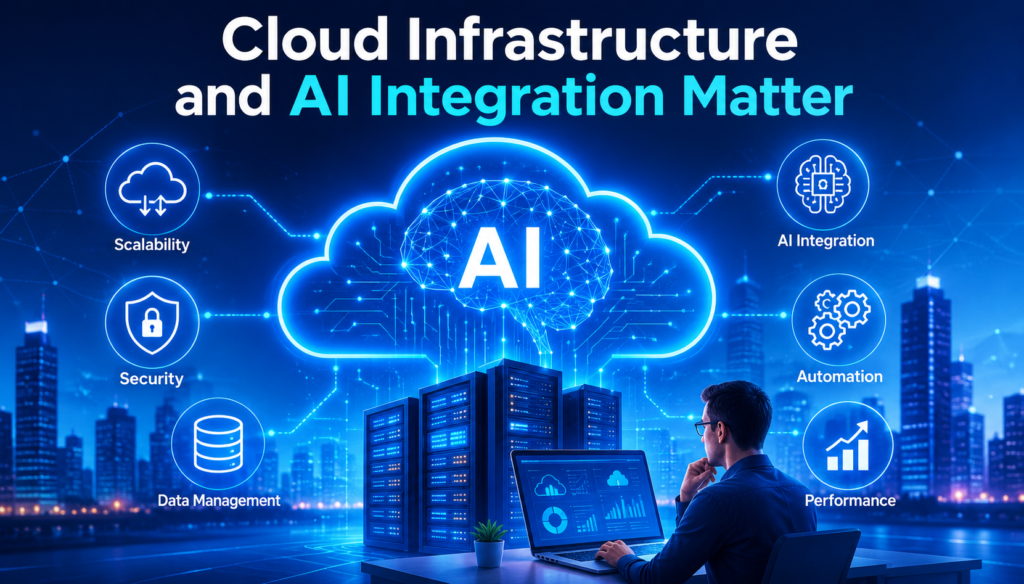
With growing use of sophisticated AI tools, firms find greater need for expandable cloud setups. Because agentic AI runs through constant data flow, it depends on scattered computation networks alongside coordinated task handling. Resource adjustment happens dynamically, given how these systems respond to shifting demands. Infrastructure must stretch or shrink without interrupting operations. Such flexibility supports reliability even under fluctuating loads.
Well-structured groundwork enables:
- Faster AI deployment
- Scalable analytics systems
- Secure data environments
- Reliable system performance
- Enterprise-level automation
- High availability operations
Even sophisticated artificial intelligence may struggle when basic support structures are missing. Performance hiccups emerge under weak frameworks. Stability during use becomes uncertain without reliable foundations. Risks to data protection grow in poorly maintained environments.
Technology providers like WaveRiser IT support businesses through cloud architecture planning, AI integration, enterprise software engineering, cybersecurity implementation, and scalable digital transformation services that help organisations prepare for long-term operational growth.
The Role of Security and Governance in Agentic AI
With growing independence in artificial intelligence, oversight mechanisms grow more essential. Enterprises today depend on frameworks that function with reasoning while preserving openness, responsibility, and safeguards for information. What matters now is balance – between capability and control. Decisions must remain traceable even when machines act alone. Rules adapt slowly; technology does not wait. Trust emerges only when boundaries are clear, actions visible. Systems evolve fast, yet expectations around integrity do not shift as quickly. Protection cannot lag behind innovation. Structure supports freedom within limits. Where automation rises, scrutiny follows closely.
Industry discussions around agentic infrastructure consistently highlight the importance of:
- Data governance frameworks
- Real-time monitoring
- Permission controls
- Audit visibility
- Compliance management
- Ethical AI implementation
As automation grows, dependable oversight keeps AI functional, accountable, and protected through consistent control structures.
The Future of Data Engineering Is Moving Toward Autonomy

Where once static setups ruled, environments now evolve through built-in responsiveness that adjusts without human oversight. Rather than simply following rules, modern frameworks interpret patterns, shift behaviour accordingly. Intelligence becomes embedded not by design alone but through ongoing adjustments shaped by real-world use. Performance gains emerge alongside lower demands on teams managing them. What was manual tending to fade under persistent refinement driven by context-aware logic.
Future directions point clearly ahead with Agentic AI. By means of self-directed processes, foresight drawn from data patterns, live decision support, alongside infrastructure that expands on demand, organizations find room to move quicker, think further, act leaner – well beyond what older models offer. A shift unfolds quietly beneath these changes.
Amidst the ongoing digital transformation and modernisation of digital operations, companies like WaveRiser IT are addressing the gap between emerging AI technologies and real enterprise application with a focus on scalable IT infrastructure, intelligent automation, and future-proof digital transformation solutions.