Changes to IT infrastructure followed a certain cycle in the past—new servers every couple of years, increased capacity when necessary, and an annual security assessment. The pace of change for this cycle has accelerated immensely. With artificial intelligence becoming mainstream, remote work becoming a permanent trend and cybercrime growing more complex, organizations in Dubai are changing their IT infrastructure at an unprecedented rate.
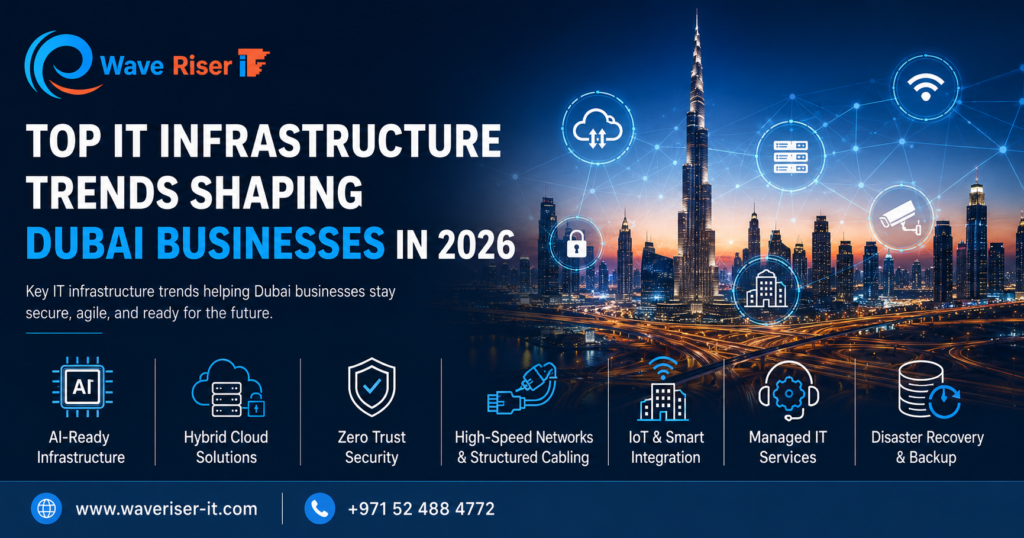
Below are some of the actual developments that are impacting forward-thinking organizations in Dubai in terms of their IT infrastructure development in 2026.
1. AI-Ready Infrastructure Has Become Mandatory
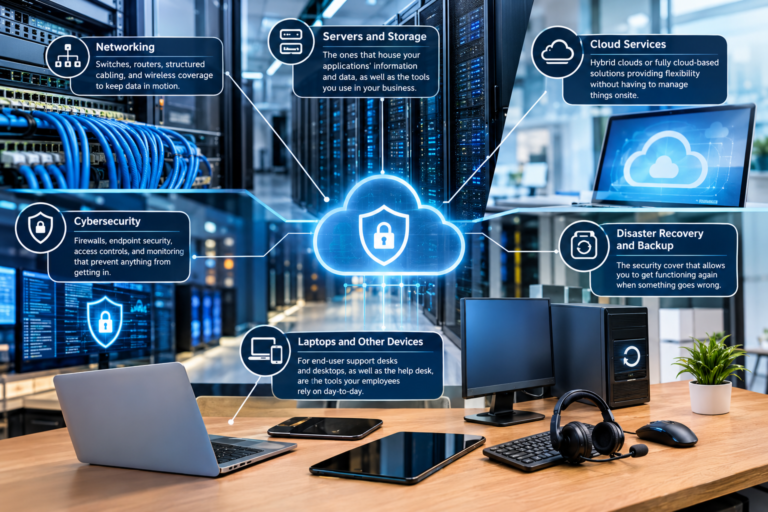
While previously AI tools were merely experimental, now they have become essential, from chatbots for handling customers to analysis for outcome prediction and automated execution of routine operations. The point is that such AI tools are resource-hungry, meaning that extra computing power, efficient data processing, and high-speed networks are needed for handling large amounts of data without bottlenecks.
To use AI efficiently, companies review their servers, storage systems, and bandwidth of the networks for building the infrastructure ready to support AI, not merely accommodate it within existing hardware infrastructure.
2. Hybrid Cloud Over "All-In" Cloud
A couple of years back, the trend was about putting everything in the cloud. In 2026, more companies will be opting for hybrid architectures, meaning that some of their workloads are kept either on-premises or in a private cloud environment, while others are deployed into the public cloud.
It is particularly true when talking about the city of Dubai because of its regulations and data residency policies, which can limit companies’ ability to fully use public cloud services for certain sectors.
3. Zero Trust Security Replacing Perimeter-Based Models
The traditional security model of creating a robust perimeter and trusting all entities that reside within does not hold up in today’s threat landscape, especially when remote workers, cloud applications, and mobile devices have rendered the perimeter indistinct. The zero-trust model of continually authenticating every user and device, irrespective of their presence within the network perimeter or outside of it, represents a shift from the previous paradigm.
Zero trust is being more widely embraced by companies in Dubai as the minimum standard instead of a more advanced one.
4. Structured Cabling and Networks Built for 10G and Beyond
With the increasing use of the cloud, the growth in numbers of IoT devices, and the rising popularity of video-based applications, it is becoming evident that the current network infrastructure is getting outdated. Companies are beginning to design their new offices or expand existing ones, requiring the installation of structured cabling and networking equipment capable of reaching 10G or faster.
It should be noted that when companies redesign, upgrade, or open new offices, the cabling they decide on is likely to determine their network capabilities for many years to come.
5. IoT and Smart Building Integration
IoT devices have become commonplace in offices, stores, and hotels in Dubai. Every new device that is brought online represents another endpoint to be secured and another data stream to be handled, which is why when planning for IoT, it should not be an afterthought but must be designed into the network infrastructure from the start.
6. Managed Services Over In-House-Only IT Teams
The recruiting and retention of specialist IT professionals like cybersecurity specialists, cloud architects, and network engineers has become difficult and costly. As a result, more Dubai-based organizations are now opting for managed IT services, whereby either the entire infrastructure management is outsourced, or a small in-house team is supported by a managed service partner.
This is not intended to replace the in-house IT staff; rather, it is meant to complement their capabilities.
7. Disaster Recovery Becoming a Standard Requirement, Not an Afterthought
Downtime is now considered a business risk and not just a technical problem, even as more business processes run entirely on computer-based technology. Disaster recovery strategies like backup procedures and failover plans are starting to appear as a regular element in infrastructure planning instead of an after-the-fact addition.
What This Means for Your Business
Not every trend applies equally to every business—a retail chain, a hospitality brand, and a financial services firm will each prioritize different pieces of this list. What they have in common is that infrastructure decisions made today are harder to reverse later, so it’s worth building with where the market is heading in mind, not just where it is right now.
How WaveRiser IT Helps You Stay Ahead
At WaveRiser IT, we help Dubai businesses build infrastructure that’s ready for what’s next — not just patched together to handle today. That includes:
- AI and advanced analytics-ready infrastructure planning
- Hybrid cloud and Microsoft Azure solutions
- Zero trust security, identity and access management, and VAPT services
- Structured cabling and network upgrades built for future capacity
- IoT, smart technology, and connected device integration
- Managed IT services with 24/7 monitoring and AMC support
- Disaster recovery and backup planning
Ready to Future-Proof Your Infrastructure?
If your current setup wasn’t built with these trends in mind, now’s a good time to change that. WaveRiser IT can assess where you stand and help you build an infrastructure roadmap that keeps your business ahead rather than catching up.