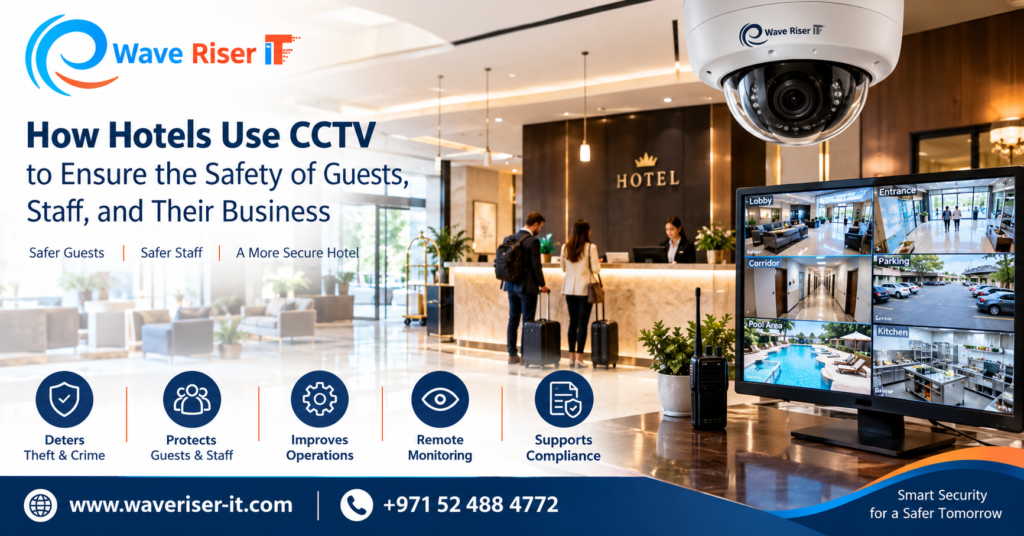
How Hotels Use CCTV to Ensure the Safety of Guests, Staff, and Their Business
A hotel does more than offer rooms. It offers peace of mind, relaxation, and confidence. From the moment they set foot on your property, guests should be assured of their safety, and for the hotel owner and manager, rest assured that their staff, property, and profits are under constant watch. CCTV is among the most convenient methods to achieve that. A security program offers a hotel a means to prevent theft, react to an incident without delay, assist guest safety, and run the hotel with fewer blind spots. Here’s how the hotels use CCTV and what you should know before installing one. What You’ll Learn The camera types hotels commonly use Where cameras should and shouldn’t go Key benefits for guests and operations Privacy and compliance basics Core Issues and Resolution Strategies Where hotel surveillance is heading Types of CCTV Used in Hotels HD and Full HD cameras. The backbone of most hotel systems. Good imaging will let the staff see people arriving at the hotel entrances, in the lobby, corridors, and in the car parks and let them carefully check exactly what happened. Night vision cameras. Hospitality establishments are up and running 24 hours a day, and outside areas such as carparks, rooftops, pool decks and service entry points tend to have little or no lighting at night. Having a good low-light performance in cameras will help in these areas. Cameras with AI capabilities. These cameras not only film but can identify strange activity in designated areas, identify loitering, get an alert about a bag that’s been left behind; count how many people are in a packed room, or warn your staff about a fall. They get the alert immediately. Vandal- and weatherproof cameras. Outside areas and community settings need durable vandal-proof cameras to take the punishment of the heat and humidity, dust, and rain. PTZ (pan-tilt-zoom) camera. Perfect for areas where you have a single shot or camera, such as a garden at a resort or a car park. Can open up an entire wide area and zoom in for detail. Key Uses in Hotels Security for guests. Cameras on show to our guests at the entry/exit points, lifts, hallways, and car parks provide visible reassurance and also act as a deterrent for any guests who are likely to misbehave. Security guards can consult camera footage and deal with an incident. Theft and loss prevention. Hotels have a large inventory of valuables to secure and look after, such as luggage, stock, equipment, cash handling areas, and storerooms. Cameras reduce the risk of theft by guests, visitors, and staff, plus they record what happens if anything does go missing. Staff and operations monitoring. Cameras at the reception, the back of house, the kitchen, the loading bay, and stores can be used by managers to ensure processes are being followed. They are also used to safeguard staff in the event of a complaint. Access control. When coupled with entry systems, CCTV can be used to identify those who have entered areas like server rooms, offices, and warehouses. Remote monitoring. Control and monitor from your phone or laptop for live or recorded video. Perfect for multi-sites or monitoring after hours. Claims and incident evidence. Whether it’s a slip and fall claim, a guest dispute, or a damage report, crisp footage can help resolve claims quickly and save time. Where to Place Cameras (and Where Not To) Recommended areas: Main entrance, lobby, and reception Lifts and lift lobbies Corridors and stairwells Loading bays, kitchens, and storerooms Cash handling and back-office areas Never place cameras in: Guest rooms Bathrooms and changing rooms Any area in which would be reasonably expected to be private by either a guest or an employee Privacy and Compliance Basics There are guests, visitors, and employees in hotels, so privacy is a concern. Considerations differ from country to country and even region to region—always check what is appropriate. Best practice is normally Displaying clear CCTV signage Only for valid security and safety reasons Restricting footage access to authorized staff Storing footage securely Deleting footage after a defined retention period A straightforward policy for dealing with requests for footage You risk claims, fines, and bad publicity if this goes wrong. Look for the most compliant and cost-effective install. Main Issues and Solution Strategies Increase compelling guest guestrooms and experiences. You want your guests to feel comfortable in a safe environment but not subject to feeling like they’re being watched. Strategically place cameras so that they aren’t so visible and limit your camera scope to your public and back-of-house spaces. Darkness in some places. Select low-light cameras and check the lighting at car parks and outdoor spaces. Large or detailed premises. Properties with multi-floor or multi-building elements require planning. A site survey will highlight areas of concern and eliminate the cost of an unnecessary camera. Large quantity of footage to store. Hotels produce a large amount of video. Design storage and retention levels at the outset and employ sensible compression. Staff training. Your staff can’t use even the most advanced system if they aren’t trained on the equipment. Provide training to security and management staff to enable them to: log findings from footage review; Respond to alarms, requests for assistance, and other events. Compatibility with your systems Choose a CCTV system compatible with access control, alarms, and the network. Where Hotel Surveillance Is Heading More Intelligent: AI analytics that discover signs of suspicious activity and detected events before they occur. Cloud and remote management: simpler supervision across several properties. Enhanced integration: CCTV co-operating with access, alarms, and property management. Enhanced data security: more secure storage of footage and easy auditing of footage.
How Hotels Use CCTV to Ensure the Safety of Guests, Staff, and Their Business Read More »