WaveRiser IT

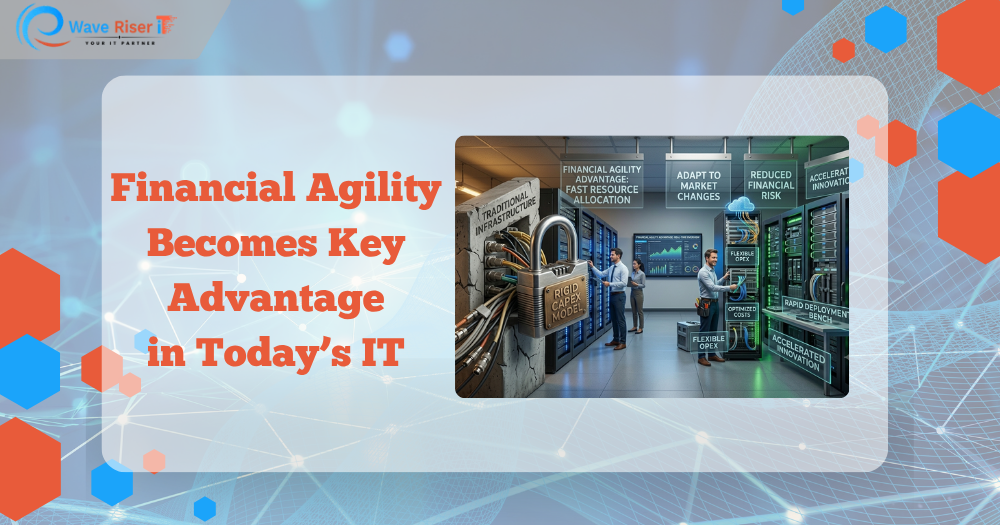
Financial Agility Becomes Key Advantage in Today's IT

Financial Agility Becomes Key Advantage Today’s IT

Today’s digital landscape moves rapidly, pushing companies beyond competition basedsolely on products or presence. Instead, speed of adaptation – financial alongsidetechnological – has become key. What matters now is synchronization: matching ITinvestments, infrastructure choices, and daily expenses to shifting demands as they occur.That responsiveness defines financial agility – not just funding change, but structuring itwhere it counts. Progress hinges less on size, more on timing aligned across systems andbudgets.When companies move further into cloud setups, automated processes, and software-controlled networks, how fast they adapt financially depends more on their technologydesign. Not merely background tools anymore, network systems, cloud platforms, and digitalframeworks now drive economic outcomes – shaping how well an organization performs,even its edge in the market.Should businesses adapt to these changes, collaboration with firms such as WaveRiser ITbecomes essential. Through personalised strategies, resilience emerges quietly beneathoperational shifts. Shape emerges where effort is guided, never merely stumbled upon.Should growth continue, its roots frequently lie in systems prepared before need arises.Scalability surfaces where planning meets flexibility. Long-term success links closely tosystems shaped early, adjusted often. financial agility IT becomes the core driver of modernenterprise competitiveness. Financial Agility in IT Flexibility in financial planning shows how well a company shifts tech budgets when needschange. In past years, spending on systems stayed rigid – high initial outlays, set hardwaresetups, slow update timelines. Now, such methods fail under current pressures.Modern enterprises require systems that allow:1. Real-time scaling of infrastructure2. Pay-as-you-grow operational models3. Faster deployment of digital services4. Continuous optimization of IT costs5. Alignment between IT usage and business outcomesWhat pushes this change? Mainly cloud setups, virtual layers, along with software-drivennetworks – these allow resource shifts on demand instead of fixed hardware limits. Resourceflexibility emerges when systems respond fluidly, moving beyond static infrastructuresanchored in physical gear.Nowhere is the shift clearer than within IT units – once seen as back-office helpers, they nowshape profit margins through spending choices. Decisions made here ripple across operational speed, affecting how fast a company adapts. Power has quietly moved; control over systemslinks directly to market standing. Networking Shapes How Money Moves For any digital operation, performance ties closely to network quality – its role cannot beoverlooked. Where services run defines how well they respond; thus, structure mattersgreatly. Efficiency emerges not solely from tools applied but also from connectionssupporting them. Cloud systems, distributed teams, workplace software – all rely onconsistent data flow behind scenes. Without steady links, delays appear even whentechnology seems advanced.Modern network architectures enable:1. Automated traffic management2. Intelligent bandwidth allocation3. Reduced operational overhead4. Improved application performance5. Lower downtime and faster recoveryFinancial gains emerge naturally from such abilities. With refined networks, companies seeless excess alongside higher output while sidestepping unwarranted spending on systems.Where management lacks precision, systems tend toward excess capacity, wasted resources,slower performance. Such conditions often result in increased costs over time, due tomisaligned priorities. A weak structure invites imbalance, where effort does not matchoutput. Long durations expose flaws more clearly, especially when oversight is inconsistent. The Role of Cloud and Automation Now shaping budgets differently, cloud computing alters business methods for handlingtechnology costs. Physical servers once demanded large upfront payments; today, firmsaccess resources through subscription models. Payment adjusts to actual usage, so expensesalign closely with current needs. Flexibility rises when capacity can scale without hardwaredelays.With automation, the model gains additional strength through fewer hands-on tasks inmanaging technology. Systems that run on their own tend to require less human oversightduring daily functions:1. Scale resources based on demand2. Detect and resolve performance issues3. Optimize workloads in real time4. Reduce human error and operational costsWithin the structure of modern IT systems, financial adaptability emerges naturally whencloud technologies merge with automated processes. Though separate in function, theircombination fosters responsiveness through integrated design. Where resources shift based on demand, efficiency appears without constant oversight. This setup allows funding patternsto align closely with actual usage trends. Over time, adjustments happen almost invisibly,guided by underlying frameworks rather than manual input.Still, added adaptability brings new layers of challenge. When setup lacks clear structure oroversight, cloud setups may lose effectiveness – spending rises without warning, operationssplit into isolated parts. Efficiency fades when control slips.Here, skilled technology support makes the difference. Expert advice in IT matters most atthis point. Financial Flexibility for Better Business Outcomes Financial flexibility offers organizations a strong position amid current economic conditions.When resources shift easily, response to change becomes smoother. With steady control overfunds, decisions align more closely with real-time demands. Movement in budgets allowsfocus where it matters most. Stability does not come from size, but from how money flows.Adjusting quickly often separates long-term performers from others. Markets reward thosewho adapt without delay.1. Launch new services faster2. Adjust to market changes quickly3. Optimize operational budgets continuously4. Scale infrastructure without delays5. Put saved funds toward new methods insteadWhere flexibility is limited, outdated technology tends to slow progress compared to moreadaptive rivals. Yet speed in response becomes a challenge when infrastructure resistschange.What once counted as mere budgeting now defines whether firms endure. A shift has takenplace: flexibility in funds shapes resilience in operations. Not simply about numbers – thistrait determines continuity under pressure. Capacity to adapt financially separates those whopersist from those who do not. Struggles with Adapting Finances Quickly Gaining control over money matters proves difficult. Obstacles stand in the way fornumerous groups, including:1. Legacy infrastructure that limits flexibility2. Lack of visibility into IT spending3. Poor integration between systems4. Security concerns in cloud environments5. Inefficient resource allocation When unaddressed, these obstacles limit how much companies gain from current IT systems.Poor preparation might cause spending to rise during cloud shifts or network improvementsrather than fall.For this reason, planning around technology support has grown necessary within currentbusiness settings. Still, ongoing oversight of systems now plays a central role in howorganizations operate today. Because of shifts in digital demands, guidance on infrastructuremust be carefully considered across companies. Even so, handling tech operations requiresconsistent attention in complex workplaces. WaveRiser IT Supports Financial Flexibility What sets WaveRiser IT apart begins with a focus on balance – capability paired with fiscalresponsibility. Through structured planning, technology deployment gains clarity withoutexcess spending.

Financial Agility Becomes Key Advantage Today’s IT Read More »

CIO 200 Global Roadshow UAE | Digital Leadership & Enterprise IT Transformation

Change moves fast within UAE businesses now, driven by digital advances, smart technologies, one step beyond old methods. Gatherings like the CIO 200 Global Roadshow UAE unite tech executives, those who decide direction, creators of new solutions – conversation centers on adjusting to constant change. This event forms one piece of a wider network linking chief information officers worldwide, where shared insight grows through dialogue rather than distance. Instead of separate systems working alone, digital environments now link tightly, crossing borders, overlapping sectors, reshaping what cohesion means. Digital leadership UAE becomes a defining factor in how enterprises respond to transformation. Here, groups such as WaveRiser IT help firms turn new ideas into real results. With knowledge drawn from worldwide gatherings like the CIO 200 Roadshow UAE, enterprises now face increasing need for strong technology systems. Security strength becomes more vital alongside flexible digital tools – each factor shaping modern operations. Growth follows where support meets necessity, especially when change accelerates. What Happens at the CIO 200 Event in the UAE? Held under clear skies, the CIO 200 Global Roadshow makes its UAE stop – a gathering shaped by insight from top-ranking IT executives, specialists guiding digital shifts, alongside those driving change inside large organizations. Through one thread linking many nations, this sequence exists to push forward how quickly sectors embrace digital tools while sharpening decision-making at executive levels. Where it lands matters; the United Arab Emirates stands distinct – not merely host but symbol – of rapid tech integration, urban systems built smart from onset, and corporate structures reinventing operations. After all, location shapes context. Usually, attention turns toward topics like reshaping operations through technology, intelligent automation within companies, defenses against cyber threats, moving services online via remote infrastructure, along with choices guided by information analysis. Participation invites top tech officers and executives to exchange insights about current pressures alongside new openings found in an ever-changing technological marketplace. Key focus areas of the roadshow include: Digital transformation and enterprise modernization AI and automation in business operations Cybersecurity resilience and risk management Cloud infrastructure and hybrid systems Information oversight plus smart analysis Leadership in the age of digital disruption Should investments continue rising in advanced technologies across the UAE, ongoing talks may shape durable digital strategies. While change in tech moves swiftly, careful discussion still supports consistent choices. When aims match future objectives, understanding tends to emerge without effort. Over time, minor discussions might redirect wider paths. Without consistent reflection, progress may lack focus despite strong momentum. UAE grows tech hub presence Among global hubs for digital progress, the UAE stands prominent. Backed by state-driven programs focused on artificial intelligence, connected public services, and online frameworks, it fosters conditions suited to technological growth in business settings. Today, places including Dubai and Abu Dhabi draw worldwide attention through active integration of new digital tools – positioning them well for influential gatherings like the CIO 200 Roadshow. With strong frameworks in place, interaction among government and corporate decision-makers grows more natural, enabling large-scale progress over time. Success over time depends on consistent adjustment when working within such conditions. Essential support emerges through organized technology planning alongside ongoing service oversight in these cases. CIO 200 Events and Digital Change Among gatherings focused on innovation, the CIO 200 Roadshow UAE stands out by design. Because insights flow freely here, companies leave better equipped to navigate what comes next in enterprise systems. By bringing together global CIOs and industry experts, the event encourages: Exchange of best practices in digital transformation Exposure to emerging technologies and global trends Strategic partnerships between technology providers and enterprises Leadership development in IT and business strategy Awareness of evolving cybersecurity threats and solutions With these observations, companies may reconsider digital goals while getting ready for future stages of expansion. A shift in focus could emerge when outcomes guide strategic adjustments across operations. WaveRiser IT and enterprise change When companies face challenges discussed at events such as the CIO 200 Roadshow UAE, dependable technology collaboration gains significance. Instead of working alone, many turns to firms capable of managing complex change – WaveRiser IT provides comprehensive digital services designed to reinforce systems, improve protection measures, while supporting expansion over time. WaveRiser IT Services: Managed IT services for continuous system reliability Cybersecurity solutions to protect against evolving threats Cloud infrastructure design and migration support Enterprise network setup and optimization IT consulting for digital transformation strategies Information handling alongside operational resilience preparation With technology matched to strategic goals, resilience grows within digital frameworks at WaveRiser IT. Change arrives quickly – structures adjust without breaking. Business aims shape every system built. Adaptation becomes routine, not reaction. Digital environments stay steady under shifting demands. Cybersecurity and Cloud Form Modern Business Foundation Among insights gathered during international roadshows such as CIO 200, heightened attention to cybersecurity alongside cloud computing stands out. With corporate functions shifting toward digital platforms, safeguarding confidential information follows naturally as a central concern. System stability gains relevance in parallel, given rising dependence on remote infrastructure. Organizations are now focusing on: Zero-trust security models Cloud-first infrastructure strategies Real-time threat detection systems Information security through coded data alongside regulatory alignment structures Automated backup and disaster recovery solutions With careful planning, WaveRiser IT aligns with strategic goals through resilient infrastructure that adapts over time. Security remains central, built into each phase of deployment rather than added later.  What matters most is steady output, even when conditions shift – pace by itself does not raise effectiveness. Performance that holds firm through variation creates real improvement. Systems grow quietly alongside needs, avoiding disruption. Risk declines when design anticipates uncertainty. Long-term function shapes every choice, even small ones. Leadership today gains new shape through events like the CIO 200 Roadshow UAE. Systems oversight forms just one part of a modern CIO’s role. Forward movement begins where purpose meets design. Rather than sudden choices, progress grows through continuous adjustment. Business change follows where such leaders lead, shaping outcomes over time. Key leadership trends include: Integration of AI into decision making

CIO 200 Global Roadshow UAE | Digital Leadership & Enterprise IT Transformation Read More »

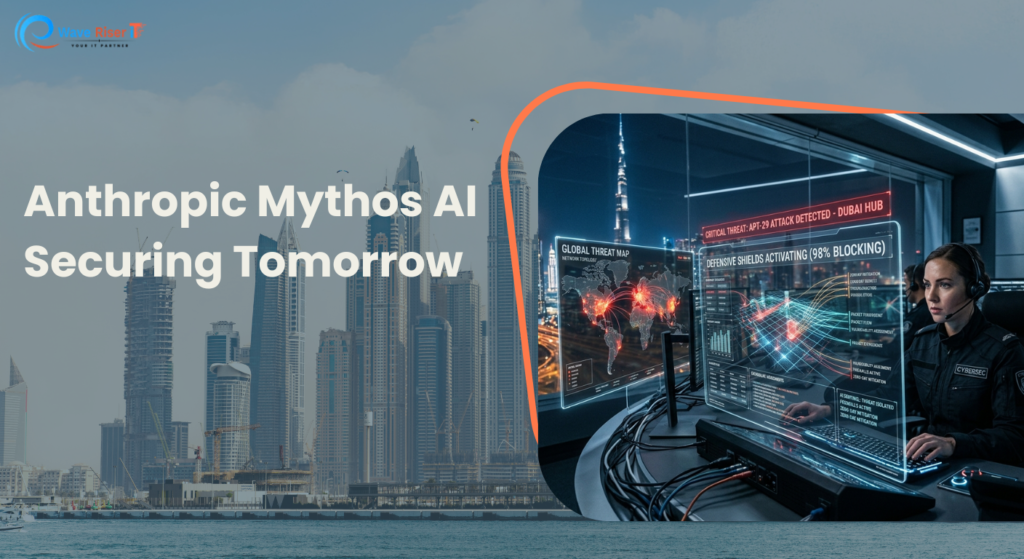
Anthropic Mythos AI and the Future of Cybersecurity

Though progress moves fast in artificial intelligence, certain advances stir more reflection. Recently, conversation within tech circles has centered on Mythos AI by Anthropic, notable for strength in online protection tasks. Rather than following patterns of routine processing or text creation, this system operates where threats meet response – examining weaknesses, assessing digital exposure, shaping how safety is managed across networks. While many models assist with efficiency, this one steps into a realm concerned with breaches, shields, and large-scale attack prevention. Attention grows not due to novelty alone, but consequence: what it sees, how it reacts, why timing matters when systems are under pressure. AI cybersecurity solutions in Dubai continue gaining importance as businesses adapt to evolving digital risks. Should conditions continue shifting at current speeds, corporate operations confront deeper implications beyond incremental progress in artificial intelligence. With growing clarity, it emerges that defenses online are transitioning into stages where automated tools outpace people in detecting flaws within code. Now, organizations must adapt to landscapes where machine-driven solutions offer safety, yet simultaneously introduce fresh uncertainties. What Anthropic Mythos AI is? Appearing recently, Mythos emerges from Anthropic as an artificial intelligence system built for rapid detection of weaknesses in software and security frameworks. Early observations indicate performance capable of uncovering undisclosed zero-day exploits across widespread platforms including operating environments and internet browsers. It stands out about Mythos that public availability was declined by Anthropic, allegedly due to risks tied to improper use. Access stays limited – only certain groups involved in secure cyber programs. This choice by itself shows the growing strength of sophisticated artificial intelligence. Earlier times saw conversations mostly focused on efficiency, automated processes, or chat-based tools. Attention now turns elsewhere – toward something delicate: the possibility that machines might surpass people in finding digital flaws. What was once theoretical edges closer to reality through such developments. How People Talk About Cybersecurity Is Shifting Always, cybersecurity means chasing threats just behind defenses. While experts fix weak spots, attackers search for openings without pause. Yet when artificial intelligence enters, speeds shift beyond past limits. It appears, based on several sector evaluations, that Mythos managed what few tools achieve – cutting down search duration for concealed flaws within intricate environments. A pattern emerged across reports: detection periods shortened significantly when this system was applied. Not by slight margins, but enough to draw attention through sheer consistency. Where others lingered, it moved swiftly. Observers noted its behavior differed from typical approaches in how early stages already showed results. Behind the scenes, something adjusted dynamically. What stayed unchanged was the outcome – faster identification without added noise. This shift alters how companies view digital safety, reshaping standards completely. With routine checks growing insufficient, continuous oversight through artificial intelligence could become essential for large-scale digital environments. Because attacks now run on automation, protection methods will need to keep step – mirroring their speed and scope. Not waiting, but adapting becomes the quiet demand of the moment. This importance stands clear within fields managing delicate information, such as: Financial services Healthcare Government infrastructure E-commerce platforms Cloud computing environments Enterprise software systems When artificial intelligence enhances cybersecurity systems, speed in reaction grows more essential. What was previously acceptable lag might now fail to guard effectively. The Growth of Artificial Intelligence in Finding Security Risks From the Mythos conversation, a key point emerges – predictive cybersecurity gains weight. Past methods typically respond once flaws appear. In contrast, AI-powered tools search for irregularities ahead of breaches. Patterns, not incidents, guide their focus. From here, new paths open – each bringing its own set of demands. While promise appears, so do complexities that require attention. While some groups improve defenses via rapid scans of weaknesses, machines that check software behavior also grow more common among attackers. Still, quicker detection methods emerge just as fast on both fronts. Among discussions on Mythos, attention often lands on its potential for divided outcomes. While one path leads to stronger digital defenses, another opens when such ability finds use in exposing flaws – should oversight falter. Not every advancement travels only toward protection; some shift silently into risk. Nowhere is the discussion around AI oversight more present than in global technology circles. Because consequences drift beyond original intent, scrutiny lands on access, boundaries, failure points, plus moments demanding correction. Once background noise, questions about authority, structure, hidden results, and strain on essential systems stand central. With behavior harder to forecast, clarity in logic, choices made, ripple effects, and endurance of frameworks gain weight unexpectedly. How This Affects Companies Today’s companies find that the Mythos conversation goes beyond mere tech news. Instead, it signals a shift – one where artificial intelligence planning must include security from the start. Not later. Never apart. Now comes a shift: firms pushing deep into digital change face new expectations. Not merely relying on common defenses grows necessary. Resilient systems form one pillar – cloud safety another. Watching ahead, spotting risks early, adapting fast turns essential. What seemed extra before now stands central. Later adoption of updates could lead to increased risk when digital dangers evolve through automation. As attacks grow sharper in method, unprepared organizations might struggle to respond effectively. Here, seasoned tech collaborators matter most. As demands grow, companies look to professionals who embed strategic safeguards within wider digital frameworks instead. Protection online extends beyond firewalls or virus scanners today. With AI, automated systems, cloud structures, and information oversight unfolding together, safety measures evolve alongside them. AI Reshaping How Companies Handle Security Unexpectedly, the Mythos case reveals the pace of advancement in artificial intelligence. Not long ago thought impossible, certain abilities now appear within reach, according to multiple experts. A shift unfolds quietly – cybersecurity frameworks face new realities sooner than expected. With every added connection in enterprise networks, exposure to threats grows. Where remote operations emerge, so do new entry points. Cloud transitions introduce shifts in control. Into these spaces step smart devices, layering further intricacy. Alongside automation advances come unseen dependencies across systems. Future-ready

Anthropic Mythos AI and the Future of Cybersecurity Read More »

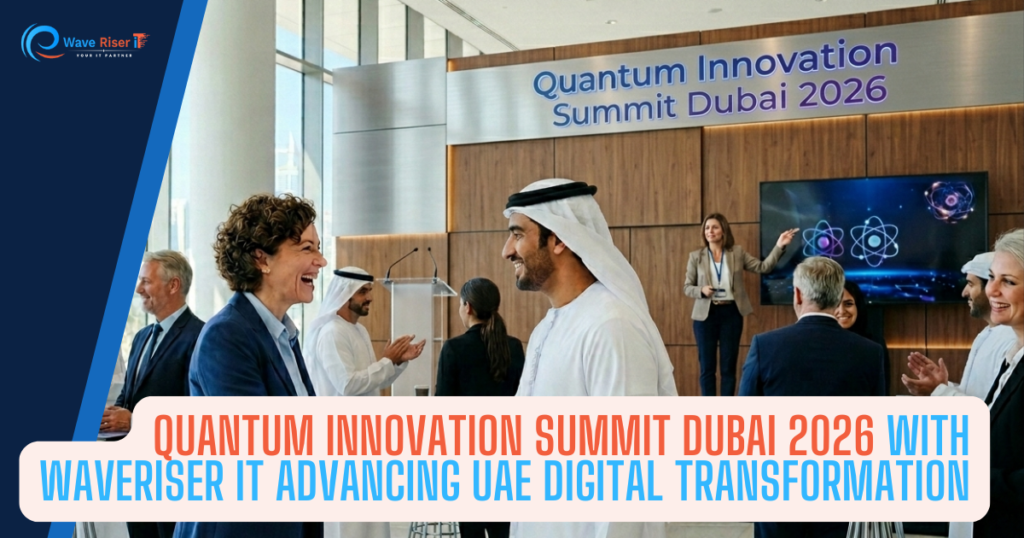
Quantum Innovation Summit Dubai 2026 with WaveRiser IT Advancing UAE Digital Transformation

Quantum Innovation Summit Dubai 2026 with WaveRiser IT Advancing UAE Digital Transformation

Out here, the tech scene in the UAE is weaving smart systems into tighter loops with strong networks and faster computing power. Leading that turn? The Quantum Innovation Summit Dubai 2026 – a place where trailblazers meet, thoughts cross paths, tomorrow gets sketched out through talks about quantum leaps, algorithmic thinking, tough digital structures, linked designs. Out here in the global tech race, Dubai keeps moving forward, thanks to companies like WaveRiser IT – built on reliability, designed for what comes next. Though events highlight what comes next, including machines built on quantum principles, real progress often begins earlier. Behind every shift lies structure; here, infrastructure adjusts quietly so enterprises keep pace without disruption. Instead of chasing trends, focus remains fixed: reliable frameworks first. When new ideas connect with existing foundations, movement happens – rarely from either alone. What grows often comes from overlap, not isolation through UAE IT services innovation. Quantum Innovation Summit Dubai 2026 Experts meet in Dubai by 2026 at the Quantum Innovation Summit to explore progress in computing, secure messaging, also smart systems. As old boundaries blur, fresh approaches rise – changing how banks operate, hospitals diagnose, cities manage data, governments deliver services. Key focus areas of the summit include: Quantum computing and processing advancements  Post quantum cybersecurity and encryption  AI and autonomous systems  Advanced cloud infrastructure and data ecosystems  Secure digital transformation strategies  With innovation shaping policy goals, the summit aligns closely with the UAE’s digital transformation path. National focus now rests on secure systems, alongside advances in urban tech frameworks. Where progress meets structure, priorities emerge – cyber resilience stands central. As ambitions evolve, so does emphasis on intelligent networks guiding future development. WaveRiser IT Role in UAE Tech Expansion As businesses in Dubai advance their technology systems, demand grows for external tech assistance across the UAE. More organizations modernizing operations find reliance on outside expertise becoming common practice. External management of digital infrastructure now sees consistent uptake. Firms adapting tools and platforms increasingly turn to specialized third-party teams. Steady movement toward upgraded software fuels extended use of remote technical services. While focus shifts toward stronger online defenses, interest in cyber protection systems within Dubai follows a similar path. Alongside this movement, requirements for hosted computing platforms through cloud-based frameworks in the region are also increasing noticeably. Performance gains emerge when WaveRiser IT supplies infrastructure personalised for enterprise demands. Security strengthens through systems built with precision oversight. Operational flow improves under carefully structured frameworks. Efficiency rises where technology aligns with real-world function. Core services include: Cybersecurity solutions and IT risk management  Cloud infrastructure and server management  IT operations handled externally. Maintenance contracts provide ongoing assistance  24/7 IT monitoring and system optimization  Data center and co-location services in Dubai  Businesses aiming toward modern IT systems in the UAE find practical backing through these offerings, a path echoed during talks at the Quantum Innovation Summit. Though less visible, such support plays into larger shifts gaining attention across tech forums. Where advancement meets planning, certain tools become essential without drawing focus. With each step forward, alignment grows between real-world needs and emerging capabilities showcased publicly. Not always stated outright, yet clearly present, is the role of quiet enablers behind bold announcements. Cybersecurity in the UAE Facing Quantum Challenges Among discussions held during the Quantum Innovation Summit, focus lands heavily on post-quantum cybersecurity. With advances in quantum computing unfolding slowly, older encryption systems may struggle – prompting a need for updated defenses. While risks grow quietly, adjustments in security practices become harder to avoid. WaveRiser IT supports cybersecurity efforts in Dubai and UAE: Advanced network security monitoring  Threat detection and response systems  Secure IT infrastructure design  Risk assessment and compliance support  Cybersecurity management services  Future-ready encryption methods support companies facing advanced digital risks, yet also align with upcoming quantum-resistant protocols. Protection improves through adaptive tools even as new threat patterns emerge across networks. Protection in digital spaces grows more critical for UAE businesses embracing change, therefore WaveRiser IT provides steady defense amid rising complexities. Though tools advance quickly, safety cannot lag behind – this tension shapes how organizations endure today. Cloud Computing and IT Infrastructure in Dubai Among topics at events such as the Quantum Innovation Summit, cloud technology stands out as a force shaping progress. Growth in today’s companies depends on systems that adapt easily, offer room to expand, yet remain protected – infrastructure of this kind becomes essential. While flexibility matters, so does resilience; without security, scale brings risk. What emerges is a need not just for power but for balance across performance, access, and safeguards. Cloud Computing Solutions in UAE by WaveRiser IT: Cloud hosting and infrastructure management  Hybrid cloud integration  Secure data storage solutions  Server optimization and maintenance  Enterprise-grade co-location services in Dubai  With these services, companies can develop adaptable technology systems across the UAE. As demands grow, operations stay functional beyond physical offices. Digital growth becomes manageable through structured support. Remote activities remain stable under rising usage loads. Essential for staying prepared in a digital world, cloud platforms support what comes next – technologies such as artificial intelligence and quantum computation rely on their structure. Though unseen, these systems quietly enable progress by holding up advanced tools that depend on vast, flexible resources. IT Managed Services in the UAE Help Keep Businesses Running Central to today’s business function lies consistent IT operation. With presence across Dubai and the UAE, WaveRiser IT provides oversight of technology environments – maintaining reliability, protection, and peak efficiency through structured support models. Services include: 24/7 IT infrastructure monitoring  Yearly service agreements  Automated system troubleshooting  IT performance optimization  Network and server management  Essential operations rely on consistent IT assistance across the UAE. Where uptime matters, these solutions maintain function without disruption. Through structured oversight, workflow interruptions become less frequent. Stability emerges when systems receive dedicated attention. Performance improves under continuous monitoring frameworks. With forward-looking oversight of technology systems, WaveRiser IT supports organizations in lowering exposure to threats while boosting operational efficiency through consistent performance standards. Quantum Innovation Summit

Quantum Innovation Summit Dubai 2026 with WaveRiser IT Advancing UAE Digital Transformation Read More »

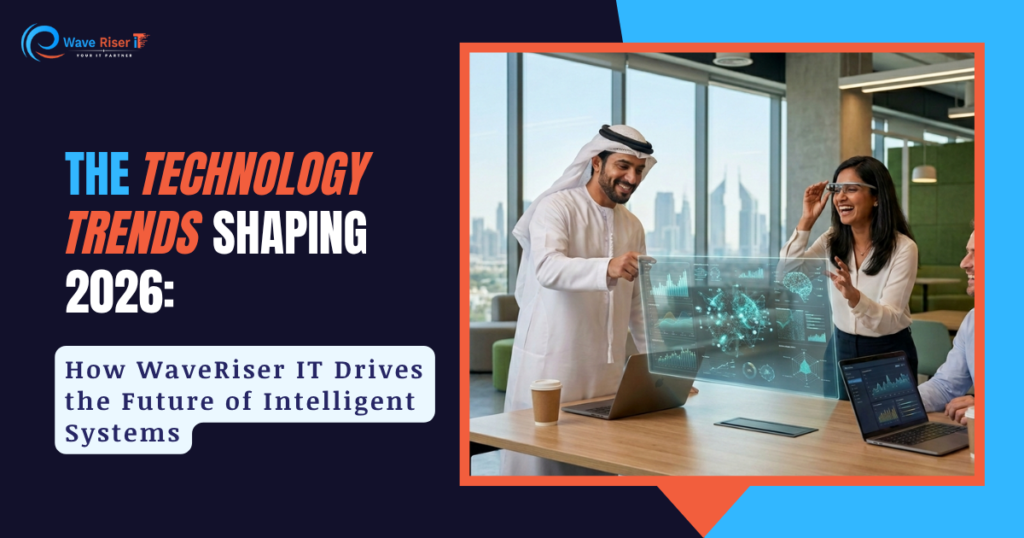
The Technology Trends Shaping 2026: How WaveRiser IT Drives the Future of Intelligent Systems

In 2026, technology shifts beyond mere digital tools or updated software. Instead of simple automation, systems now think, adapt, by themselves. Machines equipped with intelligence manage tasks once handled only by people. Connected networks interact without constant supervision. Progress arrives quietly through embedded reasoning within everyday operations. Decisions emerge from data flows rather than top-down orders. Services adjust in real time due to feedback loops built into infrastructure. Industries transform as workflows blend physical and digital layers while artificial minds assist coordination across vast operational scales. Robotics handles complexity once thought too unpredictable for machines and human oversight becomes less frequent, yet more strategic when needed. Functions evolve using learning algorithms instead of fixed rules. The familiar idea of control gives way to guided autonomy. Central to this shift stands a new wave of smart platforms, merging artificial intelligence, information flows, and automated processes within a unified framework. Not if but when defines organizational decisions now, regarding implementation speed across daily functions. In this space, WaveRiser IT becomes relevant – guiding firms through adaptation, updating infrastructure, shaping direction amid fast-moving digital change, and strengthening Digital Transformation UAE initiatives. AI Agents Changing Business Operations Emerging prominently by 2026 are AI agents, distinct from earlier automated tools. Not confined to scripted replies, these systems function independently. Task planning unfolds through adaptive logic rather than fixed rules. Execution of complex sequences happens without step-by-step oversight. Data interpretation occurs fluidly across varied inputs. Decision-making proceeds with limited reliance on people. Intelligence here reflects structured autonomy, not mimicry. AI agents are being used to: Automate complex business processes Manage customer interactions Analyze large datasets in real time Coordinate multi-step operational tasks Support decision making across departments Where once routine tasks dominated, now strategic thinking takes center stage, guided by intelligent automation. Through structured frameworks, WaveRiser IT supports system development that aligns with operational needs and current technology setups. Autonomous Machines Move into Real-World Settings What also defines 2026 is growth in tangible AI forms, such as robotic systems. Rather than relying on fixed programming, today’s machines perceive surroundings through sensors; their behavior shifts based on incoming information. While past automation followed rigid rules, current models adjust responses dynamically – learning occurs continuously during operation. Industries are now deploying autonomous systems for: Manufacturing and production lines Warehouse logistics and inventory management Healthcare support systems Agricultural automation Infrastructure inspection and monitoring Because of progress in artificial intelligence, localized data processing, and sensing devices, such platforms now perform at higher levels. With integration between robotic functions and core business operations, WaveRiser IT enables organizations to achieve greater operational reach, reduced risk, and consistent performance under variable loads. Satellite Links and Always-On Networks Across the globe, connections shift past standard frameworks. By 2026, live information flows more freely due to space-based setups alongside advanced network layers. While older models fade slowly, these emerging structures allow broader reach into remote zones. Real-time exchange gains strength where it once lagged behind. This enables: Continuous connectivity in remote areas Real-time data exchange between devices Improved reliability for global operations Stronger support for IoT ecosystems With operations like logistics, transport, or worldwide communications relying heavily on constant links, firms now face growing pressure to maintain uptime. Because seamless access matters more than ever, WaveRiser IT assists groups in shaping strong digital frameworks capable of upholding complex connection demands. Smart Systems with AI Are Now Common Where once tasks were fixed, now learning algorithms adjust silently behind screens. Though unseen, shifts appear in how software anticipates needs. Because patterns emerge faster, responses evolve without explicit reprogramming. While some processes remain rigid, many adapt moment by moment. As data flows, decisions reshape themselves quietly within workflows. Key applications include: Predictive maintenance in industrial systems AI-driven cybersecurity monitoring Smart supply chain optimization Personalized customer experiences Intelligent resource management What once seemed like incremental upgrades now shapes core business functions in unexpected ways. Through customized support, WaveRiser IT enables organizations to draw meaningful insights from information while evolving daily workflows. Fundamental shifts emerge when technology aligns precisely with real-world needs. Data Drives Digital Change Deep within each tech progress of 2026 flows data. From every linked gadget, artificial mind, or self-running mechanism come useful observations. Still, what truly matters emerges only when unprocessed information becomes clear guidance. Organizations now focus on: Real-time analytics Predictive modeling Intelligent forecasting Data-driven decision systems Automated insights generation Information flows better when structure supports clarity—this is how WaveRiser IT designs systems. Rather than simply storing data, their approach shapes raw inputs into insight-ready formats. Decisions gain speed because relevance emerges earlier in processing cycles. Accuracy improves through deliberate organization of signals across platforms. Fresh results begin to show once smart support stays within reach every day. Not magic—just steady presence changing small things over time. Cybersecurity Meets AI As machines do more on their own, keeping them safe becomes tougher. When machines connect deeply, risks increase unexpectedly. Intelligence driven by algorithms opens paths—yet widens exposure to threats. Modern security priorities include: AI-based threat detection Automated incident response Identity and access control systems Real-time network monitoring Security of information alongside regulatory alignment Protection begins where change happens—within each digital shift, WaveRiser IT embeds modern security measures by design. Resilience follows innovation when safeguards shape progress from the start. Through transformation, defense evolves without delay or compromise. The Rise of Smart Businesses Intelligent enterprises emerge where machines learn while tasks run without human input. Where networks link functions, decisions follow patterns found in streams of information. Operations shift smoothly because systems share awareness across departments. Such organizations function through coordination shaped by continuous inputs. Insight grows not from isolated tools but from links between processes. Efficiency appears when actions align with live feedback rather than fixed rules. Intelligent enterprises benefit from: Faster decision-making Reduced operational costs Higher productivity Improved customer experience Scalable digital infrastructure With WaveRiser IT, companies move smoothly into modern systems through thoughtfully built infrastructures meant to evolve. Structures shaped today prepare organizations for what comes next in growth and creation.

The Technology Trends Shaping 2026: How WaveRiser IT Drives the Future of Intelligent Systems Read More »

Scroll to Top