WaveRiser IT

How to Choose the Best IT Services in Dubai for Your Business

Running a business in Dubai and looking for the best IT services for your business? If yes, you have landed in the right place.  Running a business in Dubai is not easy. Dubai is one of the leading digital cities of the world. Selecting the right partner for IT Services in Dubai helps businesses ensure smooth growth. If you are searching for an IT services company, IT services near me, IT services in Dubai, IT services provider, or IT service provider in Dubai, this guide will offer you the absolutely practical steps for finding the best options. ​ Why Getting IT Support Right Matters More Than Ever in Dubai Dubai is facing massive digital transformation at this moment. The national goal of raising the digital economy’s contribution to GDP creates a strong demand for a reliable technology partner like WaveRiser IT. IT services and support have actually become a core business function for all of the companies these days. Market figures clearly shows taht the UAE IT services sector has been expanding steadily with cloud adoption and cybersecurity requirements and the absolute shift towards managed services. A large number of companies have moved towards proactive managed IT services in Dubai and across the UAE for various reasons. Factors That Are Shaping IT Services in Dubai Different clear factors are influencing the way companies choose their partners in 2026: Proactive monitoring over reactive fixes for absolute 24/7 visibility Stronger focus on cybersecurity and compliance with local data protection rules and industry-specific requirements Cloud and hybrid environments Predictable costs Fast on-site response with certified specialists for networking, security, and cloud. The majority of companies today look for a full IT consulting company in Dubai to gain support for their daily operations and advice on longer-term technology direction. ​ Step 1: Clarify What You Actually Need Before jumping over the different service providers, take a while and have a clear insight into your own requirements. Just ask yourself some questions, such as: How many users and devices does your company have? Do you need simple helpdesk support or full infrastructure management? Do you operate over multiple sites or free zones? Is your company cloud-based, on-premises, or hybrid? What is hurting your business at this moment? Defining scopes earlier helps in preventing mismatched expectations later. Step 2: Look for Local Presence and Real Escalation Capabilities The business landscape of Dubai is quite vast. It has its own working rhythms, access fuels, and coordination requirements with the telecom providers and facility management. A strong IT service provider in Dubai also includes people in their team who are well aware of the ground realities. Different IT issues such as Firewall changes, backup failures, Microsoft 365 tenant problems, or security incidents require specialists. So before jumping to any conclusion, ask the service pvoiders that who sits behind the first-line engineer and how quickly more senior resources are involved in the solutions. Step 3: Examine the Full Service Portfolio Quality IT services and support offer absolute assistance simultaneously. Make sure to pick the service providers who can conveniently handle: 24*7 monitoring and proactive alerting Endpoint, network, and server management Cybersecurity Cloud services and migration support Backup and disaster recovery Strategic advice when required. It will reduce the complexity of managing things more effectively. Step 4: Demand Clear Service Level Agreements Vague promises for a fast response are not quite enough. One should go for clear service level agreements to increase transparency and effective assistance: Response times by priority level Resolution targets Uptime commitments where relevant Reporting frequency and format Step 5: Check Cybersecurity Depth and Compliance Awareness Cyber threats always remain a bigger concern in Dubai. Make sure the service provider you are going to choose prioritises security in their daily operations.  Have a look at their monitoring tools, patching processes, incident response procedures, and their experience with relevant UAE frameworks. Go with service providers who are familiar with the data residency expectations and local regulatory environments, as it will help you in acquiring more reliable outcomes.  Step 6: Review Experience, Certifications and References If you are willing to have the best IT services in Dubai like WaveRiser IT for your business, it is good to go for the relevant technology partnerships and recognised certifications. Client references from similar-sized companies or the same industry help you in acquiring reliable results. Before finalising any service provider, you can ask them about their working, their knowledge, their experience, etc. Practical Comparison Framework Here is a quick comparison of the different operations:   Evaluation Area What Good Looks Like Red Flags Local presence UAE-based engineers and support Purely remote with no local cover Service model Clear managed or co-managed offering Only staff augmentation Escalation path Named specialists behind first line “We’ll figure it out” Security approach Built into daily operations Treated as a separate product Reporting Regular, measurable SLA reports Vague or infrequent updates Contract clarity Defined scope, SLAs, and exit terms Open-ended or unclear language Cost Considerations Managed IT Services providers like WaveRiser IT usually help businesses by converting the unpredictable capital and emergency costs into predictable monthly fees. The real value, however, comes from the reduced downtime, better security posture, and the ability to focus internal resources on core business activities. But still, the same helps you get a rough idea about the expected costs. Make sure to request a clear breakdown of what is included and what sits outside the core package to get a clear-cut idea. ​ Putting IT All Together So business owners! Best IT Services in Dubai are the best and most reliable extension of your team. To find the best option, start with your actual requirements, understanding of local rules and regulations, clear escalation, demand measurable SLAs, and verify security and compliance capability. Whether you need day-to-day IT Services and Support, strategic input from an IT Consulting company in Dubai, or comprehensive managed IT services in Dubai and managed IT services in UAE, the principles remain the same. Take your time. Speak to two

How to Choose the Best IT Services in Dubai for Your Business Read More »
digital innovation: startup app ideas by WaveRiser IT

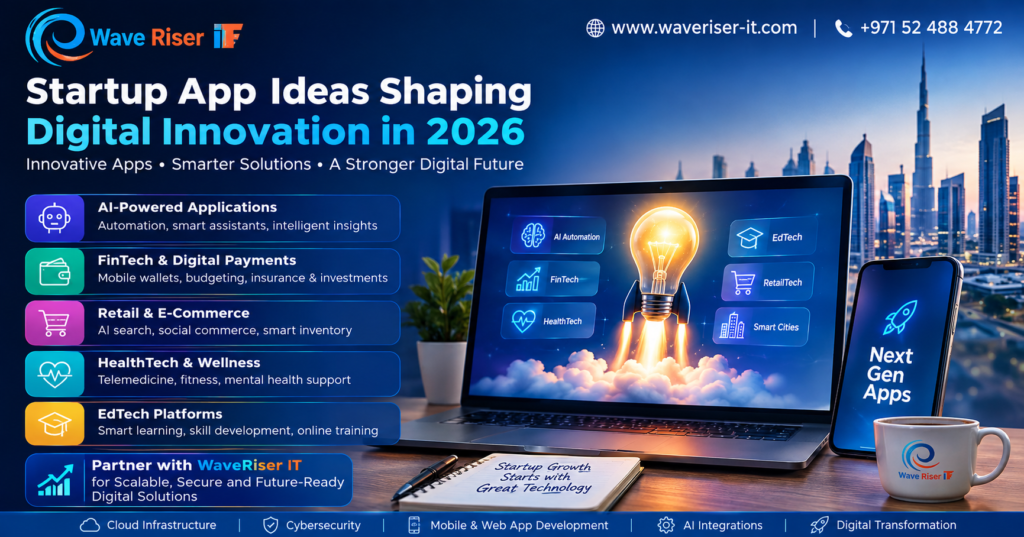
Startup App Ideas Shaping Digital Innovation in 2026

Out here, fresh concepts spark change in tech during 2026. Some new ventures reshape how digital tools evolve this year. Behind the scenes, different teams test unusual approaches to old problems. Through trial, a few stand out by doing things differently. Not every attempt sticks—yet some shift how people interact with machines. From cities to remote spots, these efforts ripple outward slowly. Implementing digital transformation projects carries increasing importance when dealing with companies that have expertise in technology. The cooperation with an experienced technology company, like WaveRiser IT, becomes more decisive when implementing projects related to digital transformation. In the modern era of startups, scalable development, cloud-based architecture, security considerations, ease of use and long-term technical support from qualified IT experts able to transform innovative ideas into dependable digital products are essential. Digital transformation solutions in Dubai continue becoming central to modern startup growth strategies. AI-Powered Applications Are Continuing To Grow In Number AI is now a major component of the development of startups today. AI is no longer reserved for big companies with extensive budgets. From repetitive tasks to enhancing customer experiences, analyzing customer behavior patterns, and providing highly personalized services, AI is being adopted by startups more than ever before. The following list of app ideas is just a handful of the most promising suggestions: Business automation software powered by AI  Explore AI hiring and recruitment systems  Smart productivity assistants  AI healthcare support apps  Intelligent travel planning systems  Finance management apps using AI  These platforms can streamline business operations, boost efficiency, and accelerate decision-making processes. With customer expectations constantly increasing, automation with intelligent recommendations is a big advantage. The Fintech And Digital Payment Markets Continue to Be Strong The finance technology sector is one of the fastest-growing digital sectors across the world. Now consumers are increasingly seeking mobile-first financial solutions that make it easy to manage their finances, make payments, and handle subscriptions, insurance, and investments. Within FinTech, there are opportunities for startups, such as AI budgeting platforms  Digital wallet applications  Loan tracking systems  Subscription management apps  Insurance comparison platforms  Wealth management dashboards  These solutions offer convenience and enhance visibility of finances for both businesses and individuals. During development, payment integration, data security, and a smooth user experience are all paramount, making professional software engineering support a vital component of the development process. Retail and E-Commerce Innovation Continues Moving Forward Now things are moving faster in shops and online stores. Speed grows where buying meets new ideas. Shopping sites now dig deeper into custom touches for each visitor. People expect smart picks when they browse, tools that let them search by image, and smooth ways to buy without delays. As per the latest trends in technology, the market of personalization in the retail industry, powered by AI, and shopping with AR is proving to be an asset to startup CEOs. Some of the most popular retail startup ideas are: Applications of AI visual search  Omnichannel commerce platforms  Social commerce apps  Live-stream shopping systems  Multi-vendor marketplace platforms  Smart inventory management tools  Startups pushing into crowded online markets need room to grow—that means solid backend support running on cloud platforms. When systems can scale smoothly, handling spikes feels less like chaos. Better tech interactions often lead customers to stick around longer. Some companies see results simply by making responses faster. Growth tends to follow when operations stay stable behind the scenes. The Healthtech And Wellness Apps Keep on Expanding The need for digital healthcare solutions continues to be high, and users have come to expect mobile apps to help them track their well-being, conduct virtual check-ins, plan their fitness, and even provide mental health assistance. Personalized recommendations and the ability to monitor and track patients are now achievable using AI-powered health systems and tools, which traditional systems cannot do efficiently. Some of the HealthTech concepts that have the potential to be high-growth are: AI mental wellness companions  Telemedicine applications  Fitness coaching platforms  Health check-up planners  Nutrition management systems  Skincare analysis applications  With the growth of technology in healthcare, cybersecurity, compliance, and data privacy are crucial. For any startup coming into this field, having a reliable development framework from the onset that can ensure security and regulations is a must. Edtech Platforms Are Crafting New Learning Moments The landscape of education technology is evolving as a way to change how people learn, train and acquire expertise. AI-driven learning systems are becoming more customized according to the level of engagement, performance, and progress of the learner. There are good opportunities for start-ups in: Language learning platforms  Smart and effective learning management systems  Corporate training applications  Skill assessment tools  AI tutoring assistants  Job readiness platforms  These sites can help make it easier for people to access and provide a means for learning from a distance and developing skills for the workforce. Today’s learning apps also include analytics features that can monitor user engagement and enhance learning outcomes as time goes on. Why Startups Need Strong Technology Partners It’s not just about software development when planning for a successful application. Innovation, scalability, security, performance, and user experience are all key factors that startups must consider, all of which have to be delivered within a strict budget and schedule. Throughout the years, studies of software startups have repeatedly found that execution guided by focus, validation speed, and flexibility of engineering practices has a significant impact on startup success. It’s where IT companies like WaveRiser IT can be especially beneficial. In collaboration with professional technology teams, startups can receive assistance in: Develop scalable cloud infrastructure  Create secure mobile and web apps  Implement AI integrations  Improve UI and UX performance  Maintain cybersecurity standards  Accelerate MVP development  Provide long-term product growth support  Start by smoothing how things look on screen. Then make every click feel natural. A fresh layout helps people move around easier. Small tweaks can lead to noticeable gains. See what happens as people test it out. Adjust until everything flows just right. Good IT consulting can prevent founders from accumulating technical debt, facing restrictions

Startup App Ideas Shaping Digital Innovation in 2026 Read More »

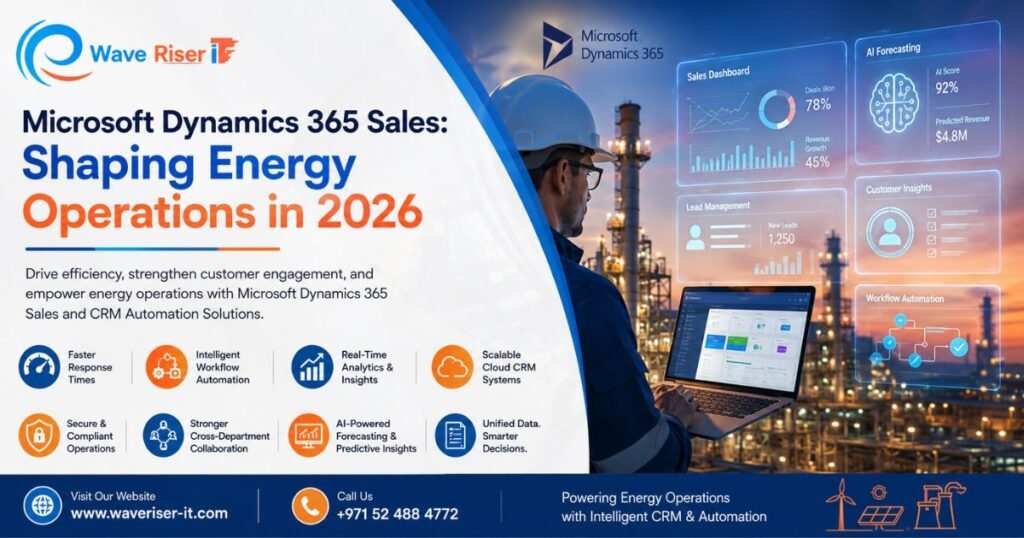
Microsoft Dynamics 365 Sales: Shaping Energy Operations in 2026

Despite growing demands, energy firms must adapt quickly – response times matter. Customer engagement improves when workflows stay aligned, though disjointed data remains common. Efficiency tends to dip where communications lag or processes rely on human tracking alone. Systems operating in isolation hinder clarity, especially during high-volume periods. With digital reach widening steadily, integrated platforms support consistency over time. Performance gains appear most notably when tools align with actual usage patterns. Longevity of operations links closely to how well technology adapts alongside change. Today’s companies do not see CRM merely as a storage space for client names and transaction logs. Instead, these tools serve as central points where messaging, task flows, data review, predictions, summaries, and interaction tracking merge into one framework. With rising demands in sales performance, organisations look toward solutions that shorten reply times yet simplify daily processes. Despite shifts in technology, firms like WaveRiser IT maintain focus on steady enterprise support via adaptable cloud systems. Not limited to storage alone, their work includes smart automation that adjusts as needs evolve. Security measures are built in, not added later, shaping how data flows safely across platforms. Integration between departments happens gradually, matching each organization’s pace. Growth is considered over years, not immediate spikes. In parallel, tools managing customer relationships gain importance – especially when speed and precision matter in sales tasks. These systems respond quickly, reducing delays once common in older methods. Businesses seeking CRM Automation Solutions increasingly rely on WaveRiser IT for scalable digital transformation and enterprise technology modernization. Why Sales Speed Matters More Than Ever Where competition grows intense, like in the energy sector, pauses in connecting with customers may reduce income chances. Service standards might slip when interactions slow down. Client relationships tend to weaken over time under these conditions. Standard methods of selling typically include steps that extend timelines unnecessarily. Manual lead tracking  Delayed customer responses  Disconnected communication systems  Limited sales visibility  Fragmented reporting  Repetitive administrative work  Inconsistent workflow management  When workflows become harder to manage, companies tend to rely on unified systems that link departmental activities. Because data flows quicker, units respond sooner – alignment strengthens among support, financial oversight, deal-making, and logistical functions. Hidden within routine tasks, small workflow hiccups often escape notice. Yet when linked together, these pauses shape broader performance trends across large organizations. Over extended periods, such accumulated friction begins affecting revenue outcomes in measurable ways. Attention to behind-the-scenes processes has become a quiet priority in modern corporate strategy. Microsoft Dynamics 365 Sales Grows in Enterprise Use Still drawing interest sector by sector, Microsoft Dynamics 365 Sales links customer information seamlessly into one view. With automated processes replacing older step-by-step methods, tasks move faster without constant supervision. Forecasting grows sharper due to consistent data feeds updated instantly. Operational insights appear as events unfold, not after delays. More companies choose this path when aiming for quicker reactions across teams. Reliance on scattered record-keeping fades gradually under such unified control. Features Often Linked To Dynamics 365 Sales Centralized customer management  Automated lead assignment  Workflow automation  Real-time sales dashboards  Predictive analytics  AI-assisted forecasting  Customer activity tracking  Integrated reporting systems  Information flows without pause when systems link together. Where once separate files slowed progress, shared spaces now keep data current. Departments find alignment not by chance but through consistent access. Instead of scattered messages, a unified flow supports daily work. Continuous updates replace manual entry. Efficiency grows where connections exist. With changes in digital frameworks, companies now favor solutions that grow smoothly within operations rather than introduce new layers. Though expansion is expected, preference shifts toward flexibility over rigid structures. Where needs shift rapidly, designs adjust quietly behind tasks. Even small updates influence long-term behavior across platforms. When demands rise, responsiveness matters more than sheer capacity. Through transitions, stability often depends on unseen adjustments. As workflows transform, alignment with real use becomes central. Over time, performance reflects how well systems bend without breaking. Automation Changes How Sales Work Today, handling sales automatically has become central to how large organizations operate. When teams rely on hand-done reminders, late alerts, repeated office work, or scattered messages, progress tends to stall unexpectedly. Streamlined digital routines step in quietly, easing friction by aligning steps without human push. Rather than piling effort, these smart sequences adjust behind the scenes, making movement smoother across departments. Automation supports businesses by helping: Accelerate response times  Reduce administrative workload  Improve lead management  Trigger automated notifications  Standardize sales workflows  Enhance reporting accuracy  Increase operational consistency  With automation spreading through company operations, tasks move faster even when team sizes stay unchanged. Flexibility rises alongside tighter oversight of how customers are reached. Though workloads grow, human input does not need to follow the same curve. What drives many companies today is a shift toward automation that emphasizes responsiveness, where quicker interactions emerge alongside clearer tracking. Efficiency remains central, yet smoother service often becomes the quiet outcome of such changes. Progress shows not just in speed but also in how openly information flows between systems and users. Real-Time Data Visibility Improves Decision-Making Information accuracy matters greatly when businesses run their daily tasks. When reports come late, it becomes harder to see problems in workflows, shifts in buyer choices, delays in processes, or upcoming revenue trends. Faster access to data – through live displays and connected analysis tools – allows companies to adjust promptly yet more accurately. Though systems differ widely, clarity often follows when insights arrive without lag. Benefits of real-time CRM visibility often include: Faster operational insights  Improved forecasting accuracy  Better customer engagement tracking  Quicker escalation management  Enhanced sales performance analysis  Stronger departmental coordination  With steady data exchange across teams, delays fade between actions taken on the ground and choices made by leadership. As timing tightens, companies begin adjusting before shifts fully unfold rather than once setbacks occur. Where analytics meet automation, speed gains matter more. Centralized setups link these pieces quietly. Performance shifts happen without announcement. Efficiency grows behind steady patterns. Quickness now shapes how systems perform together. Cloud CRM Systems Keep Rising

Microsoft Dynamics 365 Sales: Shaping Energy Operations in 2026 Read More »

Best enterprise solutions

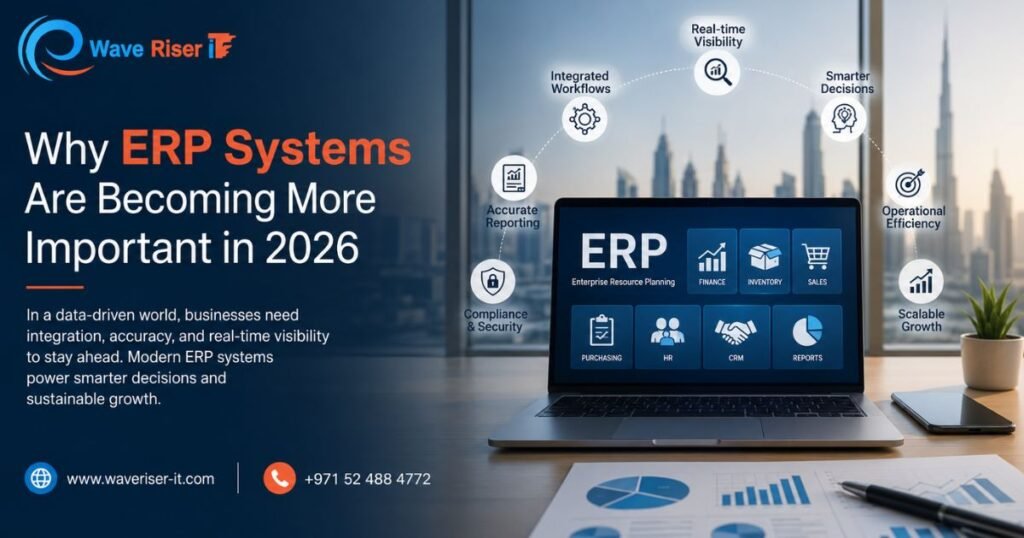
Top ERP Implementation Partners Helping Dubai Businesses Grow in 2026

In Dubai, digital adoption is ongoing as organisations evolve to integrate digital systems as a core part of their financial, logistical, customer and reporting processes, and enterprise planning. When organisations grow, spread out systems and processes can cause delays, lack of transparency, double handling and inefficiencies. Due to these challenges, ERP systems are now becoming more and more a key pillar for business expansion and sustainable scalability. ERP systems have expanded to more than just accounting capabilities. Today’s ERP systems feature finance, procurement, supply chain management, inventory, customer service, workforce management, analytics, and reporting, all within a unified system to enhance organizational control. ERP implementation partners are becoming vital in the process of successful ERP implementation, integration, optimisation and operational support in businesses that need fast decisions and flexibility. Organizations turn to specialists, such as WaveRiser IT, when modernizing systems becomes essential. Rather than delay upgrades, many adopt structured approaches to digital evolution. Infrastructure adjustments follow, guided by long-term operational needs. Enterprise applications connect smoothly, due to careful planning. Cloud platforms enter the workflow, enhancing accessibility across departments. Security models form early in the process, reducing exposure over time.  Automated functions emerge, designed around efficiency and environmental impact. ERP deployment support now ranks high among strategic initiatives. Internal procedures simplify once integration reaches completion. Performance remains stable throughout transitions, preserving daily output. Enterprise ERP Solutions continue shaping how Dubain businesses approach operational growth. Why ERP Systems Are Becoming More Important in 2026 In today’s data-rich world, businesses in Dubai are working in a big data context. To be able to make decisions, it is crucial to report accurately, have integrated workflows, have real-time financial visibility, and have operational coordination between departments. Legacy systems are hard to manage when information is split between various systems and becomes more complex with increased operational activities. Modern ERP solutions provide businesses with the following advantages: Centralise operational data  Improve reporting accuracy  Simplify finances and accounting procedures  Enhance inventory management  Automate procurement processes  Improve workforce coordination  Support regulatory compliance  Strengthen customer management  Rather than isolated software ecosystems, businesses are turning to a single environment where data seamlessly moves between business functions. Still gaining ground, Microsoft Dynamics 365 Business Central shows steady movement. Notable shifts emerge as usage expands across departments. With each update, adaptation follows in quiet but measurable steps. Progress appears without fanfare, yet momentum builds beneath routine operations. Change unfolds gradually, marked by consistent integration rather than sudden leaps. Among widely used ERP platforms across Dubai, Microsoft Dynamics 365 Business Central stands out clearly for medium enterprises needing room to grow alongside smooth system connections. Because it links effortlessly with existing Microsoft tools, operates efficiently in online environments, delivers detailed reports, meets regional regulations like GST and wage processing – this solution draws consistent interest from local firms. Despite varying needs, its balance of function and adaptability remains notable. A few identified benefits are: Integration with Microsoft 365  Cloud-first infrastructure  Scalable financial management  Every type of inventory and warehouse software  Business intelligence integration  Workflow automation  Multi-location support  ERP adoption is no longer just a software upgrade; it’s a strategic investment as businesses move towards a more connected accounting environment. Cloud ERP Continues its Transformation of Business Operations Cloud ERP has become the main topic in ERP discussions throughout Dubai. On-premises solutions can have higher infrastructure costs, hardware management needs, manual update requirements and maintenance needs. Cloud ERP systems offer improved flexibility and a range of remote access, automatic updates, scalability and simplicity of infrastructure. A number of ERP vendors are still developing cloud-based functionalities such as: Oracle NetSuite  SAP Business One  MYOB Acumatica  TechnologyOne  Epicor Kinetic  Odoo  SYSPRO  The power businesses in a variety of sectors such as manufacturing, logistics, retail, finance, mining, education and professional services. Cloud ERP also creates a seamless cross-department real-time view of operations, which decreases delays and enhances the agility of the business. ERP Implementation Partners Play A Critical Role Implementation partners matter greatly when putting an ERP system into practice. Their involvement shapes how smoothly the process unfolds. One without support may face delays or missteps. Success often depends on their experience level. Guidance from these individuals helps maintain direction. Without them, progress could stall unexpectedly. Clarity in tasks comes through their presence. Each step forward links closely to their input. Success in transformation goes beyond just selecting an ERP system. The complexity of deployment, the configuration of the workflow, planning for integration, migration strategy, security measures, employee adoption, and ongoing support after deployment all play a significant role in determining long-term success. Implementing ERP is a process that requires support from ERP implementation partners, who can help businesses with the following: Planning and consulting for the system  Business process analysis  Cloud migration  Software customisation  Integration management  Security and compliance  Data migration  User training  Ongoing technical support  In Dubai, more attention is being given to implementing strategies that focus on the industry to minimize disruption during digital transformation initiatives. Knowledge of implementing systems becomes particularly crucial when organisations grow in size and need to ensure smooth operations throughout migration. How AI, Automation, And Analytics Are Impacting Today’s ERP Systems In 2026, ERP platforms will be even more embedded in enterprise workflows with built-in AI capabilities and features of automation, predictive analytics, and business intelligence. Contemporary systems do more than hold information—they also contribute to the optimization of operations and quicker decision-making. New ERP capabilities are beginning to emerge in the following areas: AI-powered forecasting  Predictive analytics  Intelligent workflow automation  Automated reporting  Real-time dashboards  AI-enhanced customer insights  Smart inventory management  Operational anomaly detection  When businesses move toward updated ERP setups, reliance on reactive reporting alone becomes less acceptable. Instead, anticipation of operational needs begins to take priority. Systems able to support forward-looking management gain interest. A focus emerges not solely on what happened, but on what might come next. This change reflects a broader expectation: tools should guide decisions before issues arise. Awareness grows that insight after the fact is no longer enough. Security, Scalability, And Long-Term

Top ERP Implementation Partners Helping Dubai Businesses Grow in 2026 Read More »

How Agentic AI Is Transforming Data Engineering and Real-Time Insights in 2026

How Agentic AI Is Transforming Data Engineering and Real-Time Insights in 2026

Despite varied sectors relying on swift data flows for choices, oversight, service tuning, and process refinement, legacy setups within firms often falter under growing intricacy, late outputs, broken workflows, and mounting expenses. Behind these scenes, fresh talks about Agentic AI reveal a shift – firms slowly reimagining data backbones through self-directed, responsive technologies that adjust instantly. Real-time adaptability emerges where rigidity once dominated. With companies expanding their digital reach, speed in handling data grows critical alongside cuts to system costs. Not waiting for updates long after incidents occur now defines expectations across organizations. Real-time awareness during activities emerges as essential, together with self-adjusting processes, foresight through analytics, and platforms that regulate operations nearly without human help. Out of these demands, complex AI systems begin altering the nature of tasks. While some processes shift slowly, others transform almost overnight – structure follows function in unpredictable ways. Where routines once stood firm, adaptation now takes root without warning. Change arrives quietly, yet its effects spread widely across methods people rely on daily. Future-focused enterprises commit resources toward sustained digital evolution. Firms such as WaveRiser IT support operational updates across complex environments. Scalable software creation becomes a foundation for change. Cloud-based systems link processes more fluidly over time. Artificial intelligence enters workflows where repetition slows progress. Automation adjusts how tasks are handled at scale. Design priorities shift toward adaptability in uncertain conditions. AI Infrastructure Solutions continue gaining relevance as businesses seek more responsive digital ecosystems. The Move from Standard Data Engineering To Agentic AI Fixed procedures define conventional data engineering, yet oversight remains hands-on, upkeep repeats without pause, problems get addressed only after they occur. When information systems expand and scatter, technical groups find themselves buried in fixing errors instead of advancing new solutions. Studies from business sectors and artificial intelligence reports confirm one trend: rising intricacy in data burdens development units globally. Complexity grows – so does strain. Agentic AI introduces a different operational model. Should conditions shift, Agentic AI responds by interpreting new data before taking measured steps. Where traditional automation sticks to fixed rules, these models adjust course without needing manual input each time an anomaly occurs. Their responses emerge from continuous learning instead of static programming. When faced with irregularities, they assess context first – then act. Even under fluctuating inputs, adaptation happens within moments. Such behavior stems from built-in feedback loops, not scripted triggers. Some of the major areas where Agentic AI improves enterprise operations include: Self-healing data pipelines  Intelligent workflow orchestration  Automated schema adaptation  Real-time anomaly detection  Predictive infrastructure management  AI-powered analytics automation  Cloud resource optimisation  Faster business intelligence reporting  Operational speed increases when firms apply such functions across large environments. Efficiency gains emerge alongside fewer interruptions in workflow. How Agentic AI Lowers Data Engineering Expenses Among today’s business challenges, expense in managing intricate data structures stands prominent. Older platforms typically demand: Continuous engineering oversight  Expensive maintenance cycles  Manual debugging processes  Infrastructure redundancy  Multiple software orchestration layers  Constant monitoring teams  Instead of fixed routines, agentic AI reshapes operations by handling broad aspects of infrastructure oversight. Monitoring workflows becomes a constant task managed by smart agents, spotting problems before they grow. Adjustments happen on their own, guided by real-time needs rather than human input. Unneeded computation steps fade away under such responsive control. Studies into agent-driven cloud data pipelines reveal faster system recovery when artificial intelligence leads management tasks. Cost patterns shift downward across business-scale setups where these methods apply. Human effort in daily maintenance drops notably within those frameworks. Operational Improvements Linked to Agentic AI Reduced infrastructure downtime  Lower maintenance requirements  Faster pipeline recovery  Improved data reliability  Reduced cloud processing waste  Better allocation of engineering resources  With fewer hours lost to resolving breakdowns, attention shifts toward invention, data review, alongside long-term planning. Engineering units find space for deeper thinking once reactive fixes fade. Progress grows when effort moves from repair to design. Focus changes naturally when systems run smoothly. Innovation benefits most when interruptions decrease. Strategy gains strength through consistent operational stability. Real-Time Insights Shift Competitive Dynamics Later data slows income, weakens client trust, reduces efficiency, affects positioning. Immediate understanding matters more now than waiting cycles. Systems must respond without delay instead of lagging behind schedules. When data flows without pause, response times shrink. Though insight often lags behind collection, new methods now bridge that interval. Rather than waiting, analysis unfolds during arrival. Patterns surface mid-stream, not after storage. As recognition occurs, procedures initiate by themselves. Value emerges not from volume but timing – relevance peaks early, fades fast. Information gains weight only if applied while fresh. This importance grows clearer when considering areas like: Financial services  Retail and e-commerce  Healthcare  Logistics  Manufacturing  Telecommunications  Cybersecurity  Enterprise operations  With immediate data analysis, companies respond sooner when customers shift patterns, systems behave oddly, operations face issues, or markets move – staying ahead of rivals. Speed emerges where insight meets timing, revealing shifts others miss until later. Decisions gain precision because delays shrink unexpectedly. Awareness arrives early through constant observation rather than after events unfold fully. Cloud Infrastructure and AI Integration Matter With growing use of sophisticated AI tools, firms find greater need for expandable cloud setups. Because agentic AI runs through constant data flow, it depends on scattered computation networks alongside coordinated task handling. Resource adjustment happens dynamically, given how these systems respond to shifting demands. Infrastructure must stretch or shrink without interrupting operations. Such flexibility supports reliability even under fluctuating loads. Well-structured groundwork enables: Faster AI deployment  Scalable analytics systems  Secure data environments  Reliable system performance  Enterprise-level automation  High availability operations  Even sophisticated artificial intelligence may struggle when basic support structures are missing. Performance hiccups emerge under weak frameworks. Stability during use becomes uncertain without reliable foundations. Risks to data protection grow in poorly maintained environments. Technology providers like WaveRiser IT support businesses through cloud architecture planning, AI integration, enterprise software engineering, cybersecurity implementation, and scalable digital transformation services that help organisations prepare for long-term operational growth. The Role of Security and Governance in Agentic AI With

How Agentic AI Is Transforming Data Engineering and Real-Time Insights in 2026 Read More »

Scroll to Top