cloud computing services

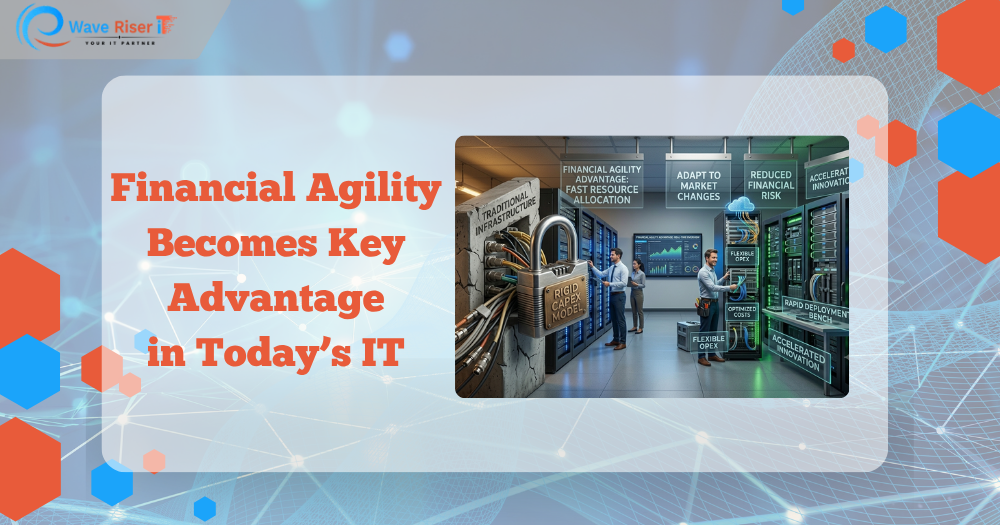
Financial Agility Becomes Key Advantage in Today's IT

Financial Agility Becomes Key Advantage Today’s IT

Today’s digital landscape moves rapidly, pushing companies beyond competition basedsolely on products or presence. Instead, speed of adaptation – financial alongsidetechnological – has become key. What matters now is synchronization: matching ITinvestments, infrastructure choices, and daily expenses to shifting demands as they occur.That responsiveness defines financial agility – not just funding change, but structuring itwhere it counts. Progress hinges less on size, more on timing aligned across systems andbudgets.When companies move further into cloud setups, automated processes, and software-controlled networks, how fast they adapt financially depends more on their technologydesign. Not merely background tools anymore, network systems, cloud platforms, and digitalframeworks now drive economic outcomes – shaping how well an organization performs,even its edge in the market.Should businesses adapt to these changes, collaboration with firms such as WaveRiser ITbecomes essential. Through personalised strategies, resilience emerges quietly beneathoperational shifts. Shape emerges where effort is guided, never merely stumbled upon.Should growth continue, its roots frequently lie in systems prepared before need arises.Scalability surfaces where planning meets flexibility. Long-term success links closely tosystems shaped early, adjusted often. financial agility IT becomes the core driver of modernenterprise competitiveness. Financial Agility in IT Flexibility in financial planning shows how well a company shifts tech budgets when needschange. In past years, spending on systems stayed rigid – high initial outlays, set hardwaresetups, slow update timelines. Now, such methods fail under current pressures.Modern enterprises require systems that allow:1. Real-time scaling of infrastructure2. Pay-as-you-grow operational models3. Faster deployment of digital services4. Continuous optimization of IT costs5. Alignment between IT usage and business outcomesWhat pushes this change? Mainly cloud setups, virtual layers, along with software-drivennetworks – these allow resource shifts on demand instead of fixed hardware limits. Resourceflexibility emerges when systems respond fluidly, moving beyond static infrastructuresanchored in physical gear.Nowhere is the shift clearer than within IT units – once seen as back-office helpers, they nowshape profit margins through spending choices. Decisions made here ripple across operational speed, affecting how fast a company adapts. Power has quietly moved; control over systemslinks directly to market standing. Networking Shapes How Money Moves For any digital operation, performance ties closely to network quality – its role cannot beoverlooked. Where services run defines how well they respond; thus, structure mattersgreatly. Efficiency emerges not solely from tools applied but also from connectionssupporting them. Cloud systems, distributed teams, workplace software – all rely onconsistent data flow behind scenes. Without steady links, delays appear even whentechnology seems advanced.Modern network architectures enable:1. Automated traffic management2. Intelligent bandwidth allocation3. Reduced operational overhead4. Improved application performance5. Lower downtime and faster recoveryFinancial gains emerge naturally from such abilities. With refined networks, companies seeless excess alongside higher output while sidestepping unwarranted spending on systems.Where management lacks precision, systems tend toward excess capacity, wasted resources,slower performance. Such conditions often result in increased costs over time, due tomisaligned priorities. A weak structure invites imbalance, where effort does not matchoutput. Long durations expose flaws more clearly, especially when oversight is inconsistent. The Role of Cloud and Automation Now shaping budgets differently, cloud computing alters business methods for handlingtechnology costs. Physical servers once demanded large upfront payments; today, firmsaccess resources through subscription models. Payment adjusts to actual usage, so expensesalign closely with current needs. Flexibility rises when capacity can scale without hardwaredelays.With automation, the model gains additional strength through fewer hands-on tasks inmanaging technology. Systems that run on their own tend to require less human oversightduring daily functions:1. Scale resources based on demand2. Detect and resolve performance issues3. Optimize workloads in real time4. Reduce human error and operational costsWithin the structure of modern IT systems, financial adaptability emerges naturally whencloud technologies merge with automated processes. Though separate in function, theircombination fosters responsiveness through integrated design. Where resources shift based on demand, efficiency appears without constant oversight. This setup allows funding patternsto align closely with actual usage trends. Over time, adjustments happen almost invisibly,guided by underlying frameworks rather than manual input.Still, added adaptability brings new layers of challenge. When setup lacks clear structure oroversight, cloud setups may lose effectiveness – spending rises without warning, operationssplit into isolated parts. Efficiency fades when control slips.Here, skilled technology support makes the difference. Expert advice in IT matters most atthis point. Financial Flexibility for Better Business Outcomes Financial flexibility offers organizations a strong position amid current economic conditions.When resources shift easily, response to change becomes smoother. With steady control overfunds, decisions align more closely with real-time demands. Movement in budgets allowsfocus where it matters most. Stability does not come from size, but from how money flows.Adjusting quickly often separates long-term performers from others. Markets reward thosewho adapt without delay.1. Launch new services faster2. Adjust to market changes quickly3. Optimize operational budgets continuously4. Scale infrastructure without delays5. Put saved funds toward new methods insteadWhere flexibility is limited, outdated technology tends to slow progress compared to moreadaptive rivals. Yet speed in response becomes a challenge when infrastructure resistschange.What once counted as mere budgeting now defines whether firms endure. A shift has takenplace: flexibility in funds shapes resilience in operations. Not simply about numbers – thistrait determines continuity under pressure. Capacity to adapt financially separates those whopersist from those who do not. Struggles with Adapting Finances Quickly Gaining control over money matters proves difficult. Obstacles stand in the way fornumerous groups, including:1. Legacy infrastructure that limits flexibility2. Lack of visibility into IT spending3. Poor integration between systems4. Security concerns in cloud environments5. Inefficient resource allocation When unaddressed, these obstacles limit how much companies gain from current IT systems.Poor preparation might cause spending to rise during cloud shifts or network improvementsrather than fall.For this reason, planning around technology support has grown necessary within currentbusiness settings. Still, ongoing oversight of systems now plays a central role in howorganizations operate today. Because of shifts in digital demands, guidance on infrastructuremust be carefully considered across companies. Even so, handling tech operations requiresconsistent attention in complex workplaces. WaveRiser IT Supports Financial Flexibility What sets WaveRiser IT apart begins with a focus on balance – capability paired with fiscalresponsibility. Through structured planning, technology deployment gains clarity withoutexcess spending.

Financial Agility Becomes Key Advantage Today’s IT Read More »
Emerging Technology Trends Shaping Modern Businesses

Emerging Technology Trends Shaping Modern Businesses

Machines communicate faster than humans, and changes occur overnight since tools change in an unpredictable manner. Machines capitalize on patterns as workers adapt without fanfare, while digital transformation remains the driver for choice within offices worldwide. Simple changes can be more powerful, and a few setups learn patterns, predicting what will come next. When the cost of delay is high, speed matters most, and the data once stored on paper now exists within hidden networks. Changes happen incrementally, while journeys often begin late at night with lines of code. Quiet clicks continue changing the rules for how companies operate. Advanced IT Solutions for Modern Business Growth Using new tech tools helps firms stay ahead, grow steadily, while boosting safety and keeping things running smoothly. The landscape of industries continues changing through new waves of innovation, and understanding what drives modern technology helps businesses remain competitive. Suddenly, AI made its way into the operation of sectors. Despite its quiet arrival, the shift reshaped entire industries in ways not immediately visible. Among today’s emerging tools, artificial intelligence stands apart because of its capability in handling repetitive work while improving data management across companies. Over time, these frameworks learn patterns, adjusting responses as conditions change without relying on fixed rules. What results is smoother operation during regular activities, shaped by continuous learning rather than one-time programming. AI technologies support: Smart business automation  Customer service chatbots  Predictive analytics  Fraud detection systems  Data-driven decision making  Intelligent business insights  These days, companies are turning to Artificial Intelligence simply to reduce routine workloads while improving how smoothly operations function every day. In healthcare, banking, retail, logistics, and online security, AI quietly continues reshaping possibilities behind the scenes. Meanwhile, cloud computing continues experiencing rapid growth. Businesses now rely on online storage instead of keeping files inside office walls, while applications function without depending entirely on local machines. Remote teams collaborate as though they are working within the same office environment. Moving from private servers toward web-based platforms allows organizations to scale more efficiently while remaining flexible as business requirements evolve. Benefits of Cloud Computing Information about businesses available remotely  Centralized data storage  Reduced hardware dependency  Improved cross team working  Improved backup & disaster-recovery  Scalable infrastructure solutions  Working together becomes easier when teams use digital platforms built for collaboration across distances. When these online environments remain secure and reliable, businesses continue operating smoothly despite disruptions or daily operational changes. Yet concerns surrounding online safety continue rising. As firms depend increasingly on connected systems, digital threats demand greater attention. Ransomware attacks appear suddenly, followed closely by deceptive phishing attempts designed to capture sensitive information. Harmful programs move quietly across networks, while security gaps allow intruders access before alerts even trigger. Every incident carries consequences that affect both operations and trust. How Modern Security Systems Protect Businesses Protect sensitive information  Monitor networks continuously  Systems must remain secure at all times  Unauthorized entry blocked through strict controls  Access permitted only under verified conditions  Security protocols activate automatically when threats appear  Only authorized users gain entry after validation checks pass  Every attempt monitored continuously without exception  Threat detection occurs as events unfold  Real-time analysis begins with immediate signal recognition  Maintain compliance standards  Reduce operational risks  Systems require protection because digital threats evolve constantly. A single breach may erase months of progress, while leaked information can rapidly damage customer trust. Strong security measures help businesses avoid disruptions while maintaining operational stability for the future. Among emerging technologies, the Internet of Things illustrates an expanding web of linked devices. Smart tools integrated into networks provide companies with live operational data, while automation improves efficiency through connected systems. As these connections expand, so does the continuous flow of real-time information across facilities. Common Applications of IoT Smart office systems  Connected industrial equipment  Asset tracking technologies  Smart surveillance systems  Energy management solutions  Automated monitoring systems  Using connected devices allows businesses to access real-time operational visibility. Through predictive maintenance systems and live data streams, organizations make decisions based on accurate information instead of assumptions. Nowadays, large-scale data plays a central role in modern business operations. Although organizations generate massive amounts of information every day, advanced analytics solutions help interpret this data while improving workflow efficiency and strategic decision-making. Key Benefits of Data Analytics Better customer insights  Real-time reporting  Improved forecasting  Data-driven decision making  Performance optimization  Market trend analysis  From data comes clarity when businesses apply analytical methods to uncover patterns hidden beneath surface metrics. Instead of relying on assumptions, decisions become guided by evidence, allowing operations to improve with greater precision. Insights emerge steadily, helping organizations strengthen their market position through informed strategies. Blockchain technology is also rapidly progressing beyond cryptocurrency. Businesses increasingly adopt blockchain systems to maintain secure transactions and transparent digital records. Although blockchain first gained attention through crypto applications, it now supports many business sectors where trust and verification remain essential. Blockchain Technology Supports Secure transaction processing  Digital identity verification  Smart contracts  Supply chain transparency  Data validation  Secure document management  Because information exists across multiple systems, trust increases when businesses depend on blockchain records. Distributed verification methods create stronger resistance against unauthorized alterations and fraud. At the same time, edge computing improves both speed and operational efficiency. By processing data closer to where it originates, businesses reduce delays while improving responsiveness. Nearby computing shortens the distance between input and output, resulting in noticeable performance gains. Benefits of Edge Computing Faster data processing  Reduced network latency  Improved operational efficiency  Better real-time application support  Enhanced system performance  Optimized bandwidth usage  In environments filled with connected devices and automated systems requiring immediate responses, edge computing becomes increasingly important because operations no longer rely entirely on remote infrastructure. Automation also continues improving operational efficiency. Businesses increasingly use automation systems to manage repetitive tasks, reducing manual workloads and minimizing human error. As workflows become more automated, consistency and productivity continue rising. Applications of Automation Solutions Workflow management  Customer communication  Inventory management  IT operations  Data processing  Administrative tasks  Reducing time spent on repetitive tasks allows businesses to focus more heavily

Emerging Technology Trends Shaping Modern Businesses Read More »

Scroll to Top