Right now, computers run much of what keeps companies going. Handling money from customers and keeping private records safe—none of this works without steady tech behind it. Yet as firms across the UAE expand fast, their exposure to online threats grows too. Hackers strike without warning, anytime, ignoring national lines completely. This is why a managed SOC service is vital for any organization aiming to stay protected in the modern landscape.
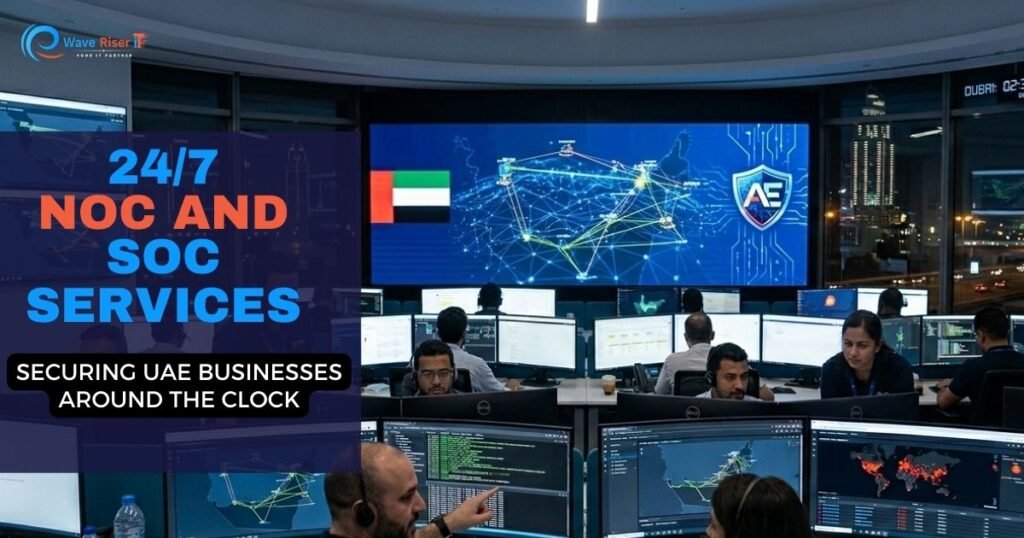
Only around-the-clock oversight keeps systems running without hiccups. A dedicated NOC along with a SOC means problems get caught fast, day or night. Run them yourself or work with a trusted IT consulting company in Dubai, such as WaveRiser IT—either way, constant watch helps avoid downtime. When monitoring never stops, security stays strong, and performance holds steady.
Understanding NOC and SOC

What makes them matter? First, take a closer look at these two IT groups—explained plainly.
- NOC – Network Operations Center. When things get shaky in your tech setup, picture the NOC stepping in like someone checking pipes and wiring after a storm. Everything from live systems to digital pathways falls under their watch. A frozen machine or sluggish links? That’s when they move fast, quietly restoring flow before most even notice it broke. Their job keeps operations ticking without fanfare.
- SOC – Security Operations Center. A watchful presence keeps an eye on your digital world. When something harmful shows up—like malicious software or someone sneaking in—it reacts without delay. Protection kicks in fast, cutting off danger before harm unfolds. This team stays alert, ensuring disruptions are blocked quickly.
Frequently running alongside one another, NOC keeps systems up while SOC guards against threats. Occasionally working apart yet always aligned, their combined presence ensures constant uptime plus protection. Without drama or delay, operations continue smoothly under watchful monitoring. Security stays sharp because checks happen nonstop. Through quiet coordination, safety and function move forward together.
The Risk of Unplanned Downtime
Midnight strikes, yet most company tech checks pause till morning light. When screens dim and workers leave, intruders begin their move—slipping through gaps left behind after hours of shutdown.
A few hours matter when protection never sleeps. Watchers inside your network stay awake through every night and day. Unusual logins catch their eye just as much as sudden surges in data flow. Mistakes in systems get spotted fast, no matter the clock. Even at dawn’s quietest moment, defenses hold firm.
Live Threat Spotting and Handling
Minute by minute, an uncaught break-in gets uglier. Fast response beats every other move when staying safe online.
Think of a security operations center like a constant watch—always on, always moving. It spots threats early because one alert can change everything. Detection happens faster when tools work together instead of alone. Mistakes drop off when humans and systems share the load. Every second saved tightens the response. Hidden risks come to light before they spread. This kind of setup doesn’t wait for disaster—it leans forward into warning signs. Protection isn’t about strength; it’s about timing. What slips through elsewhere gets caught here simply due to rhythm and reach.
Right away, warnings pop up when something seems off. Machines spot odd behavior without delay.
Alerts get checked live by skilled SOC staff who decide whether something is dangerous or just noise. Real threats are spotted quickly, while harmless signals fade into the background without fuss. Each signal passes through human judgment before any conclusion takes shape. These experts stay sharp, separating true risks from misleading triggers every step of the way.
When a threat turns out to be genuine, the SOC moves fast—cutting off compromised systems right away so it can’t jump to others on the network. Faster threat handling comes from mixing smart tools with skilled people. How well risks are controlled often depends on that blend. Tools work better when guided by experience. People adapt more quickly when supported by strong systems. Speed grows where knowledge meets design.
24-Hour Network Monitoring
Sudden outages strike without warning. When systems halt—servers, online platforms, or internet pathways—the ripple shows fast in daily work, money flow, and maybe trust. A pause too long leaves marks.
Ahead of failure, systems check their own pulse—CPU, memory, and network—to catch strain early. Before crashes show up, constant tracking spots odd loads in circuits. Signals shift when resources run thin, giving a warning ahead of collapse. Machines whisper stress through rising heat in processors or choked data lanes. Watching traffic flow reveals pressure points long before breakdown hits. Patterns emerge under watchful sensors, halting disasters quietly.
Fine-tuned data flow keeps vital programs running without hiccups. When demand spikes, priority tasks stay sharp—others adjust behind the scenes. Resources shift quietly, moment by moment. No lag wins when traffic piles up. Important tools never wait for their turn. Smooth operation continues, even under pressure. Each app gets what it needs—no more, no less.
Before most people spot a problem, it’s already resolved. Glitches get cleared without fuss, letting work flow smoothly. Issues vanish quietly, so users stay focused on tasks. Trouble is handled behind the scenes, often before anyone blinks. Maintaining peak performance happens when systems are watched nonstop. Clockwise from midnight, operations stay steady through constant oversight. Each hour brings fresh checks that keep downtime far away. Round-the-clock watching means fewer surprises during work hours. Through persistent tracking, smooth running becomes the norm rather than the exception.
Local Knowledge Makes a Difference
Finding ways to streamline tasks often leads some companies toward automation. Yet handling operations through a local team—or partnering with WaveRiser IT in Dubai—brings benefits that machines alone cannot match. Location matters more than it seems at first glance.
Midnight report runs might look odd to outside systems. Yet familiar teams recognize them as routine. Local staff get how your workflow actually works. Outsiders might flag what insiders know is standard. When it comes to rules about data, the UAE keeps a tight grip through laws like NESA and its National Data Protection Law. Because of that, having people on the ground who know the system makes all the difference for how tech systems run day to day.
When things go wrong, getting straight to a person familiar with your systems saves time instead of waiting on hold at some distant support line. Right where you need it, local knowledge makes sure your NOC and SOC work well, stay secure, and fit just right. A nearby touch keeps things running without risk, shaped exactly how your team operates.
Cost vs. Value—The ROI of Security
Most think round-the-clock security centers cost too much. Yet one breach can drain funds fast—payoffs, penalties, lost users, and halted work all add up quicker than prevention ever would.
- Law compliance: To avoid huge legal penalties.
- Trust: Protect customer trust and retention.
- Resilience: Stopping the total collapse of operations or disappearance.
Working alongside WaveRiser IT means companies can tap into round-the-clock network and security monitoring, even if they skip building a large internal team. Instead of staffing many roles themselves, firms rely on external support that runs all day, every day. This way, operations stay covered without adding dozens of hires in-house.
The Importance of IT Consulting in Dubai
Besides offering guidance, a Dubai-based IT consultancy such as WaveRiser IT gives clarity when things feel unclear. Their team helps by breaking down the next steps, so the beginning becomes less overwhelming.
A closer look at what you have now might show where things could go wrong. Spotting weak points means understanding differences between present performance and desired outcomes. This process helps reveal areas needing attention before problems grow. Finding gaps today can prevent bigger issues tomorrow. Create an NOC/SOC roadmap tailored to your organization’s size and needs.
Start by picking systems that track threats before they grow. Tools like SIEM gather logs across networks, spotting odd patterns early. One option pulls data together, so teams see issues fast. Another choice, called SOAR, links security steps into smooth workflows. It lines up alerts, actions, and checks—no gaps left open. Some setups respond automatically when danger shows. These helpers work behind the scenes, never pausing. They keep watch through nights and busy days alike.
Safeguarding Your Organization Ahead
When you follow this advice, your company will have the proper tools in place. It moves forward with clear steps instead of guesswork. The way teams are set up begins to support security naturally. Protection of digital information becomes part of how work happens. Everything fits together because planning comes first. Technology stops being background noise—it becomes what holds everything together. When teams run their own monitoring center day and night, outages shrink while defenses adapt on the fly. Threats shift every week, yet systems keep pace without missing a beat.
Start with clear sight, then add firm oversight—pair that with ahead-of-time defenses. Build it yourself or team up with WaveRiser IT; either way, stay locked on those three points. Watch everything all the time, and run tight security day after day—it protects more than files. To ensure your business is resilient, investing in cybersecurity in Dubai and robust SIRA-approved CCTV frameworks is essential. Think trust, think clients staying put, think money still coming in. Right now, someone could be inside your systems. Staying safe means having experts watching day and night—not because it helps, but because falling behind isn’t an option anymore. By utilizing a 24/7 network monitoring service, you ensure that your digital assets remain secure against evolving threats.